Journal
When Research Learns to Breathe
La Petite Bande, Japan, and the Return of the Violoncello da Spalla
December 2011 — Osaka-Sapporo
The First Permission
From early encounters with instrument making in Kabardino-Balkaria to the 2004 violoncello da spalla revival, the 2007 Galpin Society article, this concert tour across Japan, and the 2023 Da Spalla book, this essay traces how research entered performance life.
There are moments when research ceases to be an argument and becomes sound.
I sensed this long before Japan. Long before La Petite Bande. Long before the violoncello da spalla returned to the stage. I sensed it as a child in the mountains of Kabardino-Balkaria, when fruit trees entered blossom all at once. No announcement. No need for witnesses.
The air changed. Expectation gathered quietly until Master Oiberman created an entire orchestra of folkloric instruments. Thirteen thousand eight hundred people filled a city stadium, the culmination of years of work in a tiny atelier. Materials were scarce. Knowledge was fragmented. He travelled on horseback to remote villages, searching for traces of a culture nearly erased—first in the nineteenth century, later under Stalin.
“Why not revive a voice that has been silenced for too long?” Oiberman asked. Not forgotten. Silenced. The distinction matters.
For him, it was the voice of the people among whom I grew up—a landscape where blossoming orchards rise toward glaciers, where rivers are so clear you do not see the water until you step into it. For me, the wider lesson came later: some musical work is not about display, but about restoring a voice to use.
As a child, I absorbed this without knowing it. The power was not only in sound, but in the responsibility before and after it.
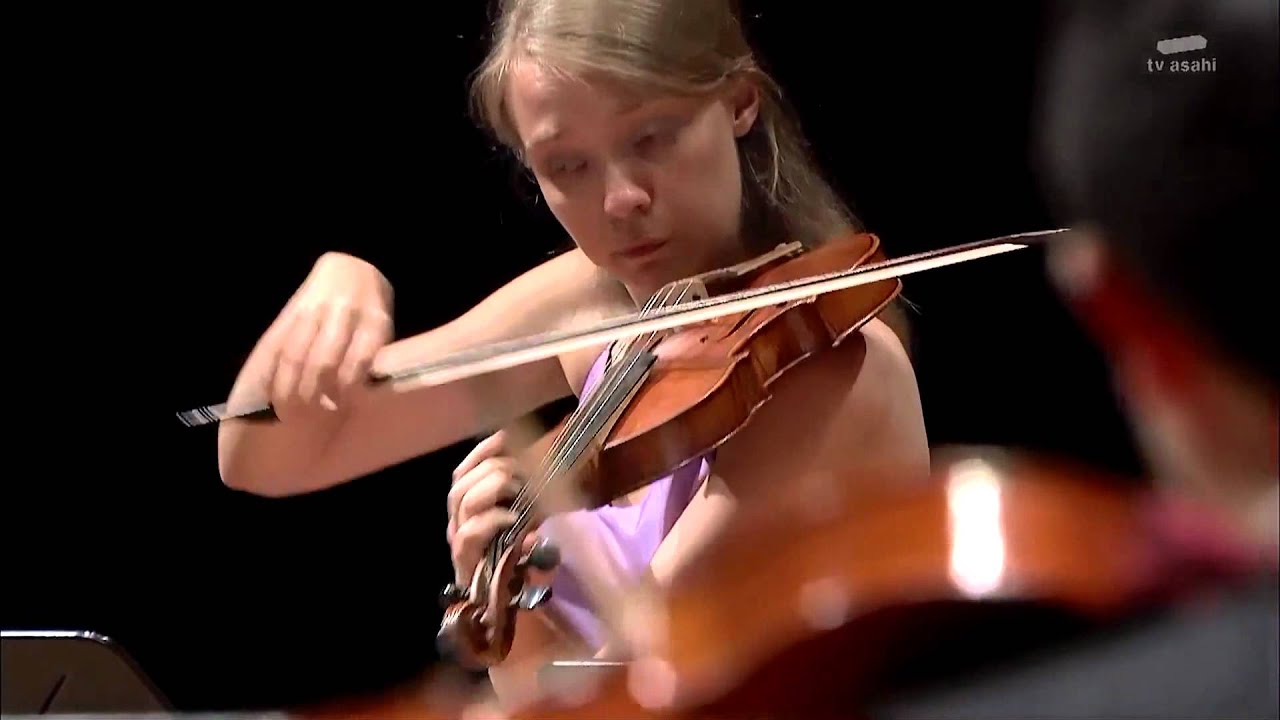
La Petite Bande, live in Osaka, 2011. Three violoncelli da spalla — The Art of Fugue model
The First Permission
From early encounters with instrument making in Kabardino-Balkaria to the 2004 violoncello da spalla revival, the 2007 Galpin Society article, this concert tour across Japan, and the 2023 Da Spalla book, this essay traces how research entered performance life.
There are moments when research ceases to be an argument and becomes sound.
I sensed this long before Japan. Long before La Petite Bande. Long before the violoncello da spalla returned to the stage. I sensed it as a child in the mountains of Kabardino-Balkaria, when fruit trees entered blossom all at once. No announcement. No need for witnesses.
The air changed. Expectation gathered quietly until Master Oiberman created an entire orchestra of folkloric instruments. Thirteen thousand eight hundred people filled a city stadium, the culmination of years of work in a tiny atelier. Materials were scarce. Knowledge was fragmented. He travelled on horseback to remote villages, searching for traces of a culture nearly erased—first in the nineteenth century, later under Stalin.
“Why not revive a voice that has been silenced for too long?” Oiberman asked. Not forgotten. Silenced. The distinction matters.
For him, it was the voice of the people among whom I grew up—a landscape where blossoming orchards rise toward glaciers, where rivers are so clear you do not see the water until you step into it. For me, the wider lesson came later: some musical work is not about display, but about restoring a voice to use.
As a child, I absorbed this without knowing it. The power was not only in sound, but in the responsibility before and after it.
From Research to Presence
By the time La Petite Bande toured Japan, the violoncello da spalla no longer existed only in treatises, engravings, or scholarly debate. It had been reconstructed specifically for this ensemble in 2004, following years of research—research that later became part of what I call Sound Alchemy: a harmony-first method for translating musical relationships into physical form.
But scholarship alone does not create musical life. Life begins when an instrument is used—not as an exhibit, but as a working body among other working bodies.
Sigiswald Kuijken never stood apart from the ensemble. Often, one had to search for him. There was no podium, no gesture of authority, no visible hierarchy. At times he played the violin; at times the spalla. Always, he played from within the sound.
This absence of theatrical authority found its clearest reflection in a remarkable piece of musical journalism by Teruhiko Ikegami for the Nikkei (2014). Ikegami wrote of his own disorientation—searching for the leader, only to discover there was none. Kuijken stood indistinguishable among the players.
He recognised that this was not merely a performance style. Authority became musical rather than theatrical. The ensemble made space for listening rather than display.
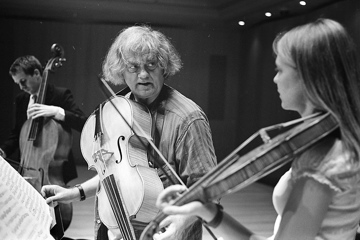
Sigiswald Kuijken with the violoncello da spalla, speaking with concertmaster Ann Cnop
From Research to Presence
By the time La Petite Bande toured Japan, the violoncello da spalla no longer existed only in treatises, engravings, or scholarly debate. It had been reconstructed specifically for this ensemble in 2004, following years of research—research that later became part of what I call Sound Alchemy: a harmony-first method for translating musical relationships into physical form.
But scholarship alone does not create musical life. Life begins when an instrument is used—not as an exhibit, but as a working body among other working bodies.
Sigiswald Kuijken never stood apart from the ensemble. Often, one had to search for him. There was no podium, no gesture of authority, no visible hierarchy. At times he played the violin; at times the spalla. Always, he played from within the sound.
This absence of theatrical authority found its clearest reflection in a remarkable piece of musical journalism by Teruhiko Ikegami for the Nikkei (2014). Ikegami wrote of his own disorientation—searching for the leader, only to discover there was none. Kuijken stood indistinguishable among the players.
He recognised that this was not merely a performance style. Authority became musical rather than theatrical. The ensemble made space for listening rather than display.
The Instrument Changes the Room
The violoncello da spalla alters more than timbre. It reshapes posture, balance, and responsibility. Bass lines cease to dominate vertically and begin to move horizontally. Inner voices gain autonomy.
The ensemble breathes differently when scale is reduced to its most honest form: one player per part. This was not a decorative stylistic choice, but a practical musical one. Ikegami described the ensemble’s approach as “thorough.” There was nowhere to hide. No one to dominate.
Musicians feel this immediately. Tempo is no longer imposed; it is inhabited. Phrases become shared spaces rather than statements. Listeners sense it too, even without language for it. They speak of riding, of travel, of motion. They do not speak of brands.
Bach, even in secular music, rewards this kind of restraint and structural listening.
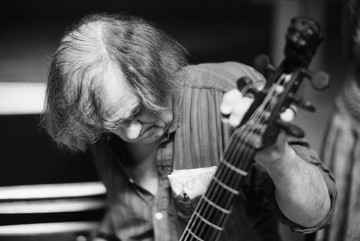
Sigiswald Kuijken tuning his viol
The Instrument Changes the Room
The violoncello da spalla alters more than timbre. It reshapes posture, balance, and responsibility. Bass lines cease to dominate vertically and begin to move horizontally. Inner voices gain autonomy.
The ensemble breathes differently when scale is reduced to its most honest form: one player per part. This was not a decorative stylistic choice, but a practical musical one. Ikegami described the ensemble’s approach as “thorough.” There was nowhere to hide. No one to dominate.
Musicians feel this immediately. Tempo is no longer imposed; it is inhabited. Phrases become shared spaces rather than statements. Listeners sense it too, even without language for it. They speak of riding, of travel, of motion. They do not speak of brands.
Bach, even in secular music, rewards this kind of restraint and structural listening.
Sound Without Advocacy
What remained most striking was how little explanation was needed. The instrument was neither defended nor justified. It was simply used.
In the live performance filmed in Japan, the violoncello da spalla does not announce itself. It reorganizes the music quietly from within. Ikegami described its effect as a “lighter gravity”—a melodic emergence that requires no apology and no scholarly defence.
This is the most persuasive argument an instrument can offer: to become indispensable without demanding attention.
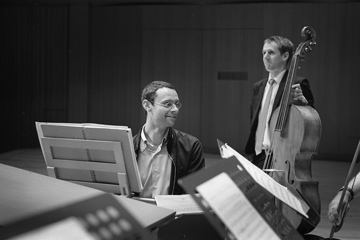
Benjamin Alard at the harpsichord with Ronan Kernoa, basse de violon
Sound Without Advocacy
What remained most striking was how little explanation was needed. The instrument was neither defended nor justified. It was simply used.
In the live performance filmed in Japan, the violoncello da spalla does not announce itself. It reorganizes the music quietly from within. Ikegami described its effect as a “lighter gravity”—a melodic emergence that requires no apology and no scholarly defence.
This is the most persuasive argument an instrument can offer: to become indispensable without demanding attention.
From One Instrument to a Choice
It would be misleading to attribute this to one individual alone. Had the violoncello da spalla remained merely Sigiswald Kuijken’s personal solution, there would have been a single instrument—and no more.
What followed was rarer. Other musicians perceived that the instrument allowed a different relationship between bass line, melodic movement, body, and ensemble texture. This recognition required a decision. They could remain witnesses—curious, respectful, detached.
Instead, they chose to become players of the instrument themselves.
That collective choice allowed the instrument to move from singular experiment to continuity: from one player to many, from research to living performance practice.
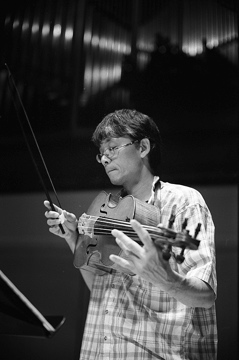
Makoto Akatsu with the violoncello da spalla
From One Instrument to a Choice
It would be misleading to attribute this to one individual alone. Had the violoncello da spalla remained merely Sigiswald Kuijken’s personal solution, there would have been a single instrument—and no more.
What followed was rarer. Other musicians perceived that the instrument allowed a different relationship between bass line, melodic movement, body, and ensemble texture. This recognition required a decision. They could remain witnesses—curious, respectful, detached.
Instead, they chose to become players of the instrument themselves.
That collective choice allowed the instrument to move from singular experiment to continuity: from one player to many, from research to living performance practice.
A Landscape That Listens
Japan did not receive this music with enthusiasm alone, but with attention.
On trains heading north, following the unfolding of blossom, the musicians showed no concern for performing history. The atmosphere was calm, restrained. I thought of the orchards of my childhood—heavy with bloom, indifferent to observation.
This same attention is present in the ancient Dogū figures of the Final Jomon period. Their goggle-like eyes do not look outward; they prepare. In Japan, as in Bach, the experience was not theatrical. It was inward, disciplined, and alert.
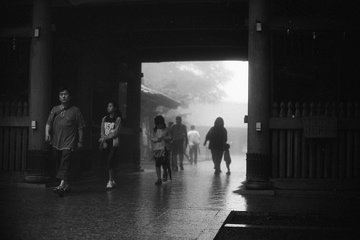
Entrance to a temple in Japan
A Landscape That Listens
Japan did not receive this music with enthusiasm alone, but with attention.
On trains heading north, following the unfolding of blossom, the musicians showed no concern for performing history. The atmosphere was calm, restrained. I thought of the orchards of my childhood—heavy with bloom, indifferent to observation.
This same attention is present in the ancient Dogū figures of the Final Jomon period. Their goggle-like eyes do not look outward; they prepare. In Japan, as in Bach, the experience was not theatrical. It was inward, disciplined, and alert.
Beyond the Notes
In the late 1980s, in Kabardino-Balkaria, the revival of folkloric music was not a movement but a necessity. Instruments were scarce. Knowledge was broken. What endured was the understanding that music connects people, memory, place, and use.
Oiberman’s example taught me this: restored instruments matter only when they return to musical life, and when sound is treated with restraint rather than excess. That understanding resurfaced here, unexpectedly, through an instrument held against one's chest rather than placed at the feet.
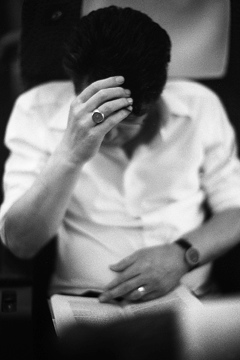
Geert Robberechts reading on a train heading north
Beyond the Notes
In the late 1980s, in Kabardino-Balkaria, the revival of folkloric music was not a movement but a necessity. Instruments were scarce. Knowledge was broken. What endured was the understanding that music connects people, memory, place, and use.
Oiberman’s example taught me this: restored instruments matter only when they return to musical life, and when sound is treated with restraint rather than excess. That understanding resurfaced here, unexpectedly, through an instrument held against one's chest rather than placed at the feet.
What Remains
Had Sigiswald Kuijken not asked for this instrument, the violoncello da spalla would likely have remained a correct footnote—and nothing more.
What followed was a shared responsibility: to allow the instrument to disappear into the music, and to accept what such disappearance demands.
The highest success available to a maker is not visibility, but use: the instrument disappears into musical work and becomes necessary without demanding attention.
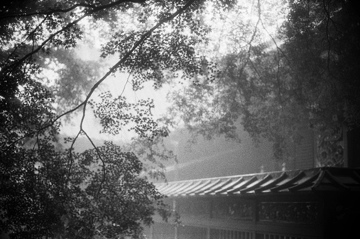
Rain falling on the fence of a shrine
What Remains
Had Sigiswald Kuijken not asked for this instrument, the violoncello da spalla would likely have remained a correct footnote—and nothing more.
What followed was a shared responsibility: to allow the instrument to disappear into the music, and to accept what such disappearance demands.
The highest success available to a maker is not visibility, but use: the instrument disappears into musical work and becomes necessary without demanding attention.
Coda
Some instruments proclaim their names, and the names of those who once owned them. Others carry forward the culture that made them possible.
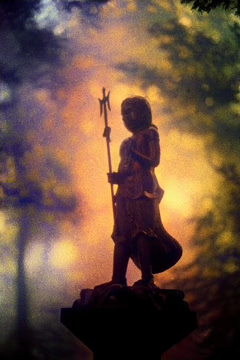
These photos were taken on 35mm film with a Leica M6 during the journey from Osaka to Sapporo. The original version appeared on this website shortly after the tour; this is a revised edition from January 2026, The Hague.
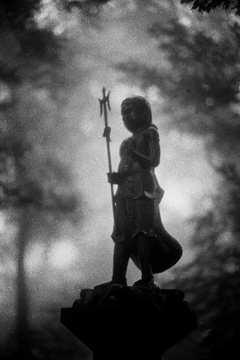
A guardian figure emerging from mist
Coda
Some instruments proclaim their names, and the names of those who once owned them. Others carry forward the culture that made them possible.
These photos were taken on 35mm film with a Leica M6 during the journey from Osaka to Sapporo. The original version appeared on this website shortly after the tour; this is a revised edition from January 2026, The Hague.