Violin — The Dies Irae Model
Made by violin maker Dmitry Badiarov in The Hague.
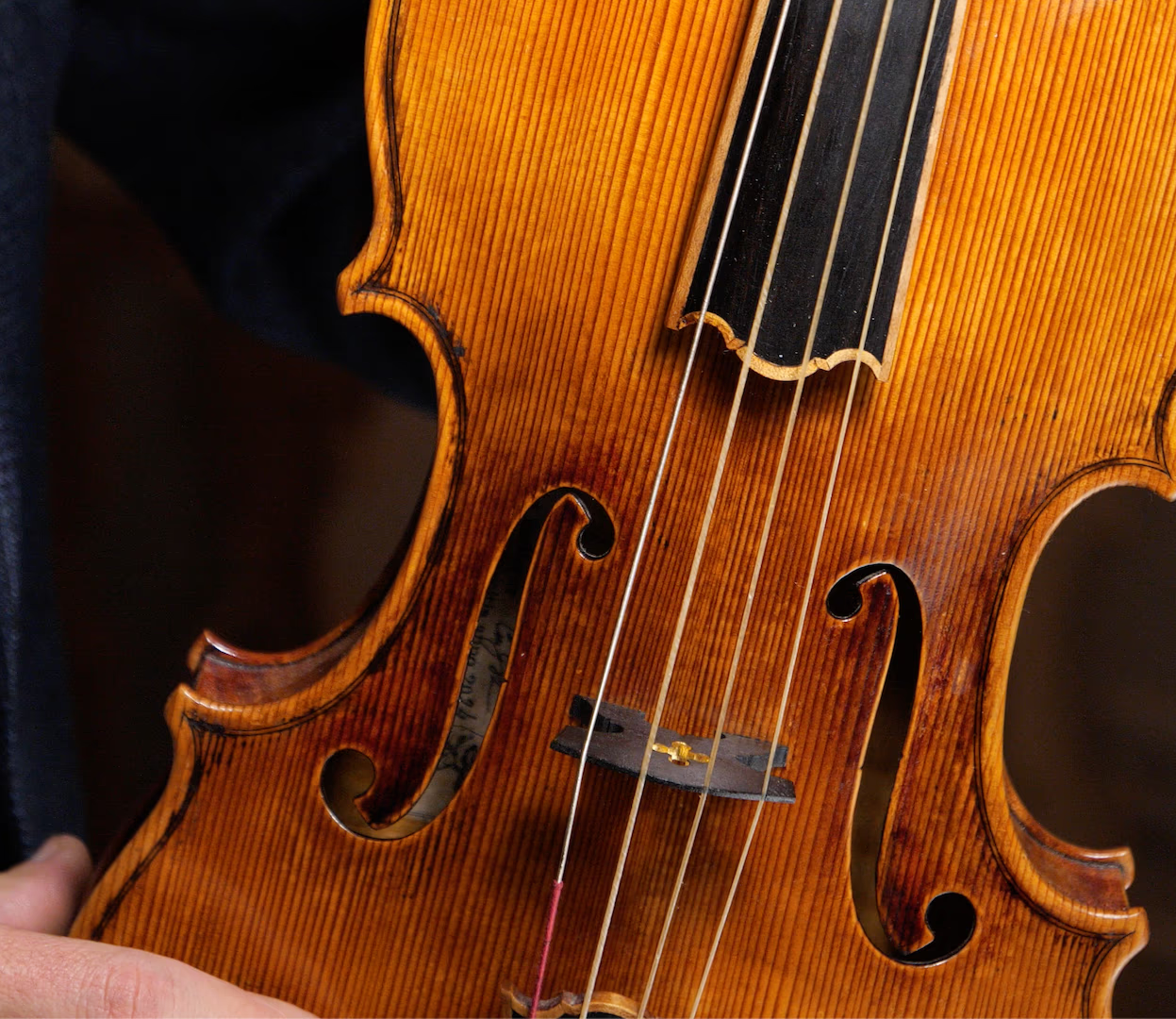
My most popular model
The Dies Irae Violin is a tribute to the chant that inspired many composers for centuries, from Charpentier to Rachmaninoff. The title is not decorative. It marks where the work begins.
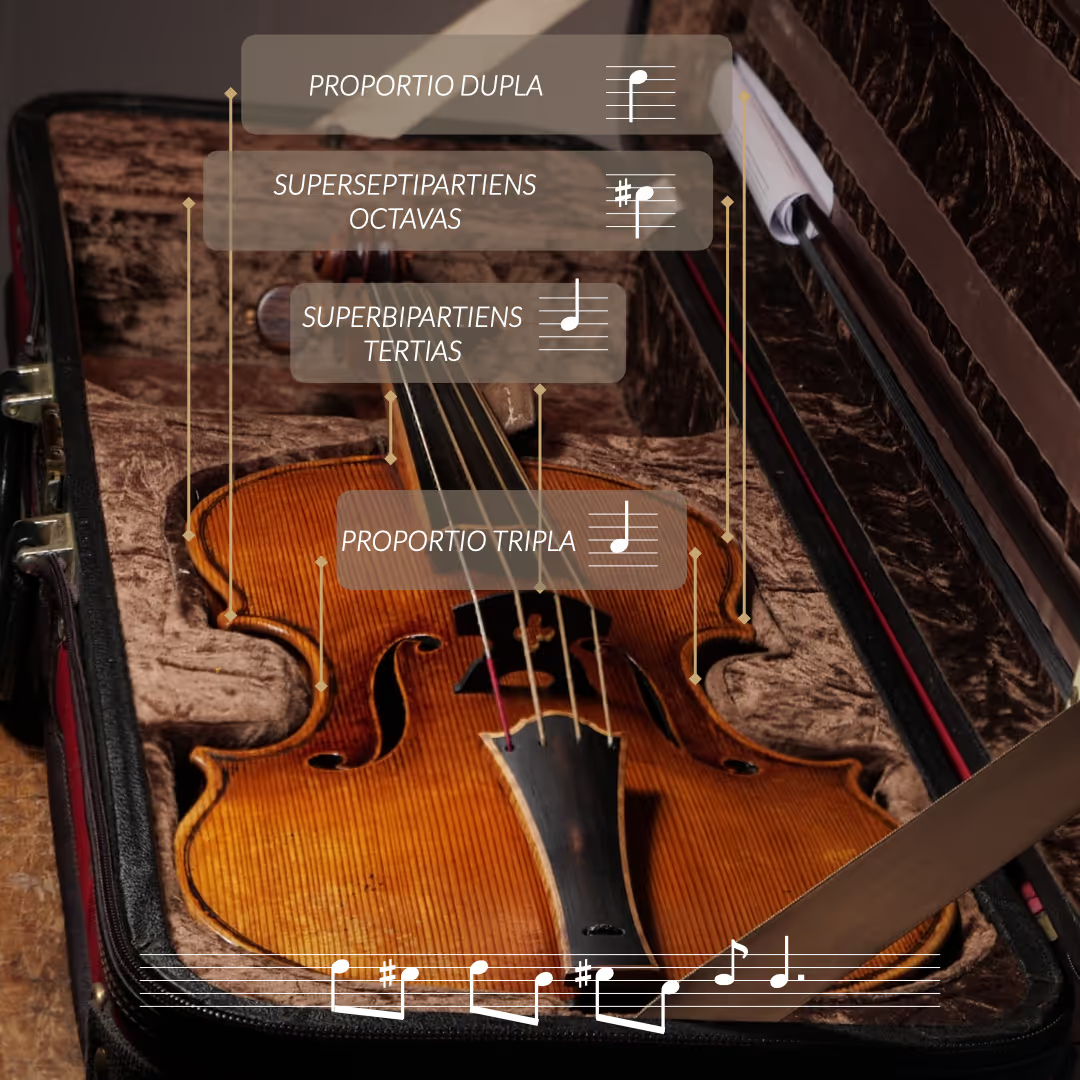
Dies Irae Violin geometry study showing musical relationships translated into instrument proportions.
A tribute to the Dies Irae chant
The model begins from one of the most persistent musical ideas in European sacred music. Its proportions, handling, and character continue from that source rather than from surface copying.
Workshop process for the Dies Irae Violin at Badiarov Violins.
Quidquid latet apparebit
What is hidden shall be revealed. Words taken from the Dies Irae chant. Our work reveals how harmony was the core of everything the masters did, until something happened and we simply forgot the value of starting with harmony in mind.
For historical and modern performance
The Dies Irae Violin is made for professional musicians working across historical and modern contexts. Setup, pitch, response, projection, and physical handling are adapted to the musician and to the repertoire.
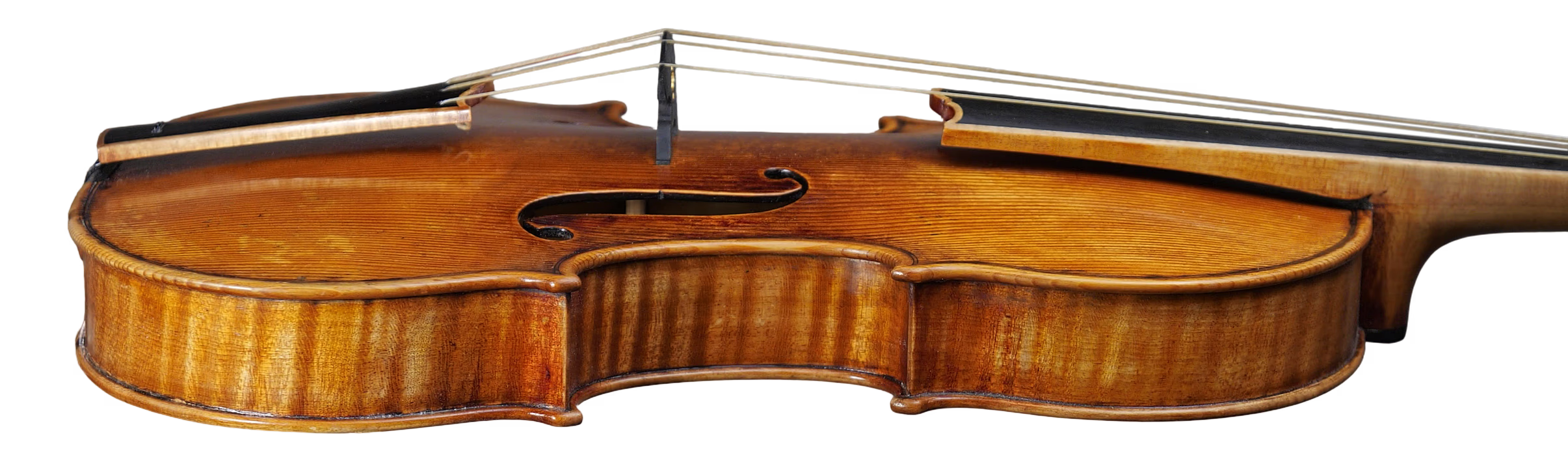
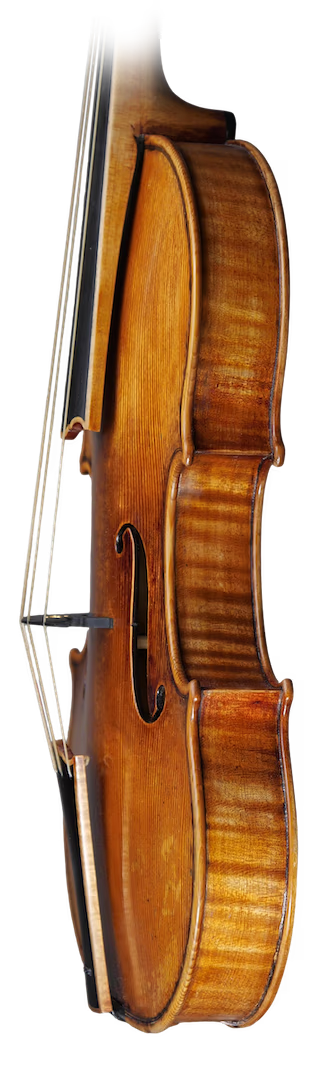
Two violins heard in the same space: a 17th-century Milanese instrument and the 2023 Dies Irae Violin. Recorded minutes apart, without balance correction or tonal adjustment.
“How can a new instrument be predictable before it is finished?”
A commission is not guesswork. Before measurements are fixed, Badiarov studies the musician’s repertoire, physical needs, intended sound, setup, pitch, and practical performance context.
This is the role of his harmony-first method: musical relationships are translated into proportion, geometry, response, and voice, so the instrument is shaped with clear musical and physical purpose.
The method has informed repeated commissions for professional musicians including Sigiswald Kuijken, Sergey Malov, and Ryo Terakado.
Witnesses
“I thought it was an antique Italian”
Viktoria Mullova
Concert Violinist
“His instruments have purely Italian character”
Renato Scrollavezza
Luthier, founder of Parma School of Violin Making
Commissioning a Violin — The Dies Irae Model
Each Dies Irae Violin is made to commission by violin maker Dmitry Badiarov for a specific musician, repertoire, setup, pitch, and physical relationship with the instrument.
Workshop and bespoke versions are available. Investment depends on the model, materials, setup, and artistic requirements.
Commissioning begins with a private conversation.
Made individually for professional use.