Violin — The Art of Fugue Model
Made by violin maker Dmitry Badiarov in The Hague.
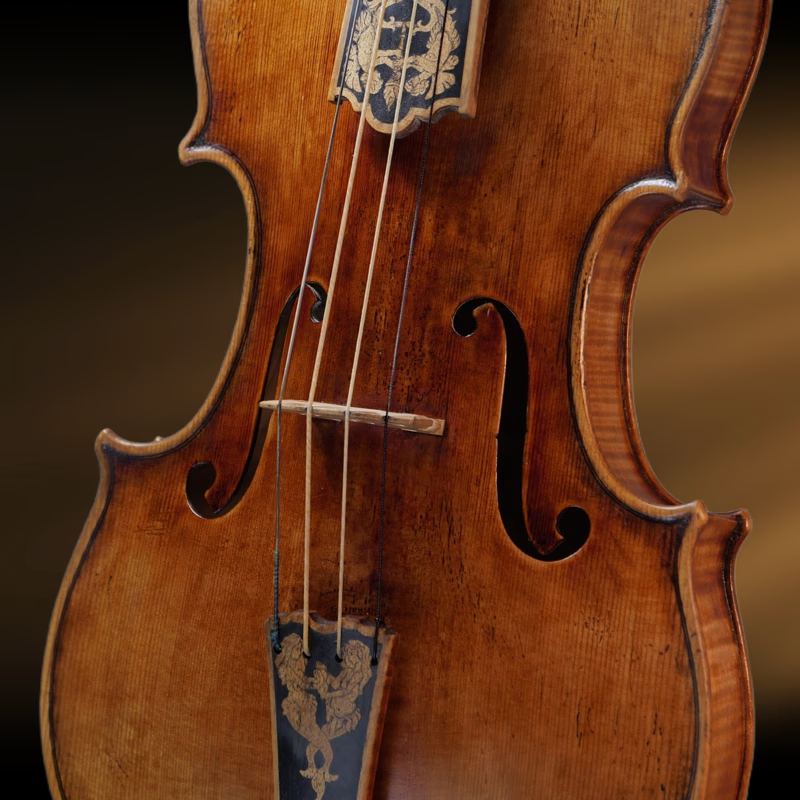
A violin shaped from Bach’s Art of Fugue
Conceived in 2009, The Art of Fugue Violin begins from Bach’s unfinished contrapuntal work. Its curves and proportions are not chosen as decoration. They continue from the music itself.
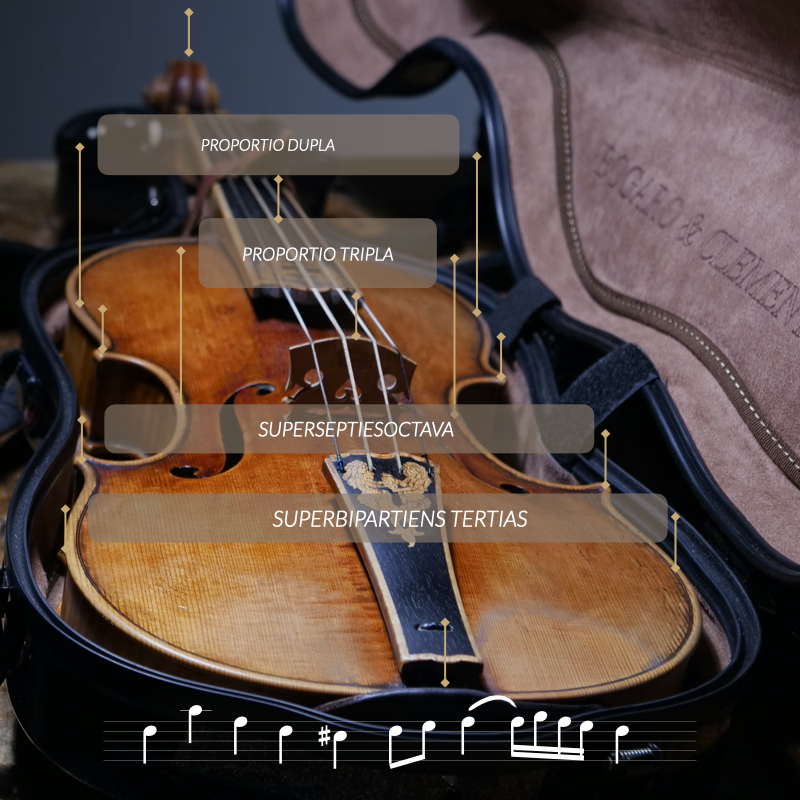
The Art of Fugue Violin geometry study showing musical proportion translated into instrument form.
Measurements and expression derived directly from Bach’s Art of Fugue
The work begins from Bach, not from surface imitation. The model is for musicians who appreciate that there is more depth to music than just the notation, and who see music from the depths of centuries rather than just today’s trends.
Sound Alchemy method study for translating musical relationships into instrument design.
We continue where the masters left off
The Art of Fugue Violin is not named after Bach for decoration. It begins from Bach’s musical thought and follows it into proportion, response, and form.
For musicians who hear beyond the notation
The Art of Fugue Violin is made for professional musicians whose relationship with music reaches beyond style, fashion, and surface correctness. Setup, pitch, response, projection, and physical handling are adapted to the musician and to the work the instrument is intended to serve.
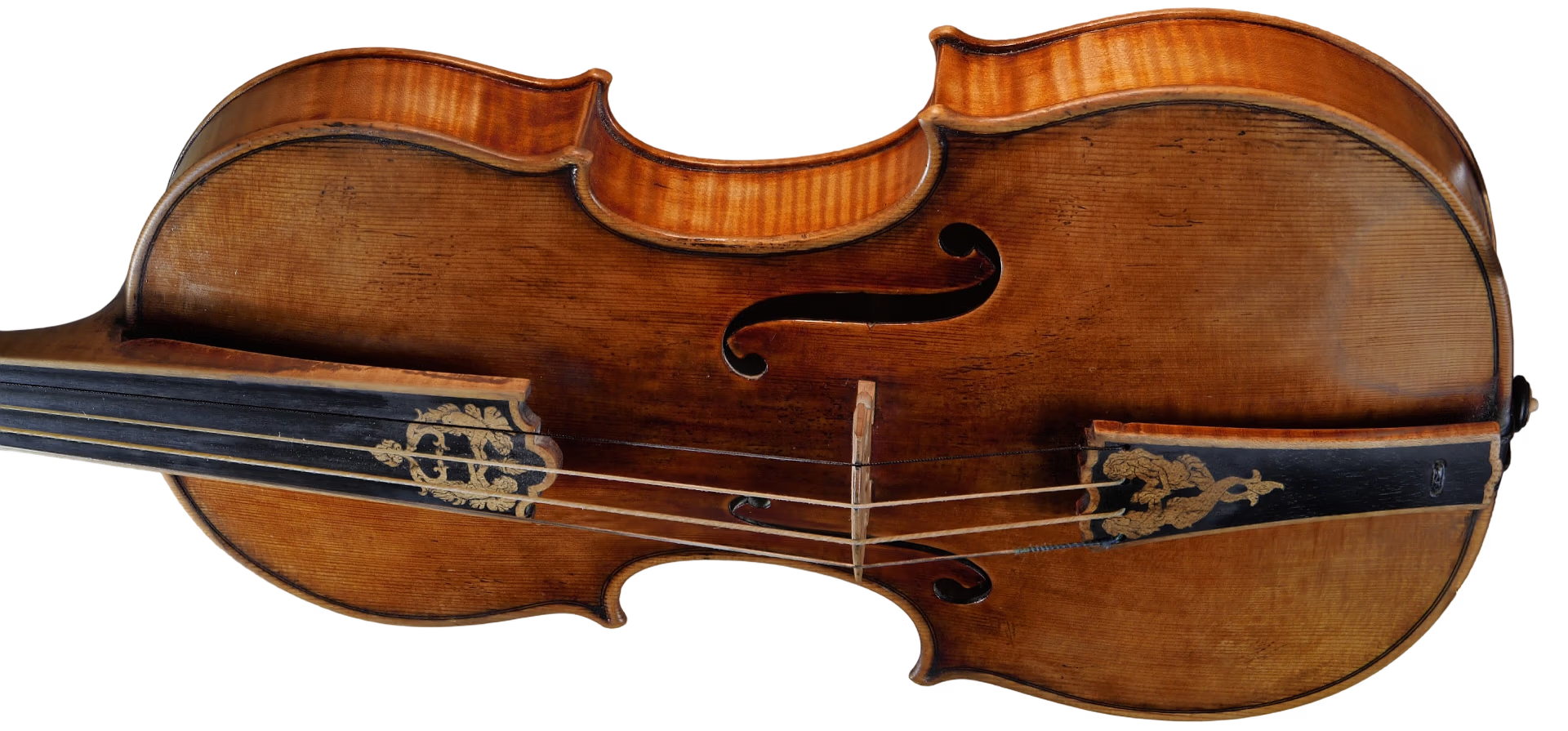
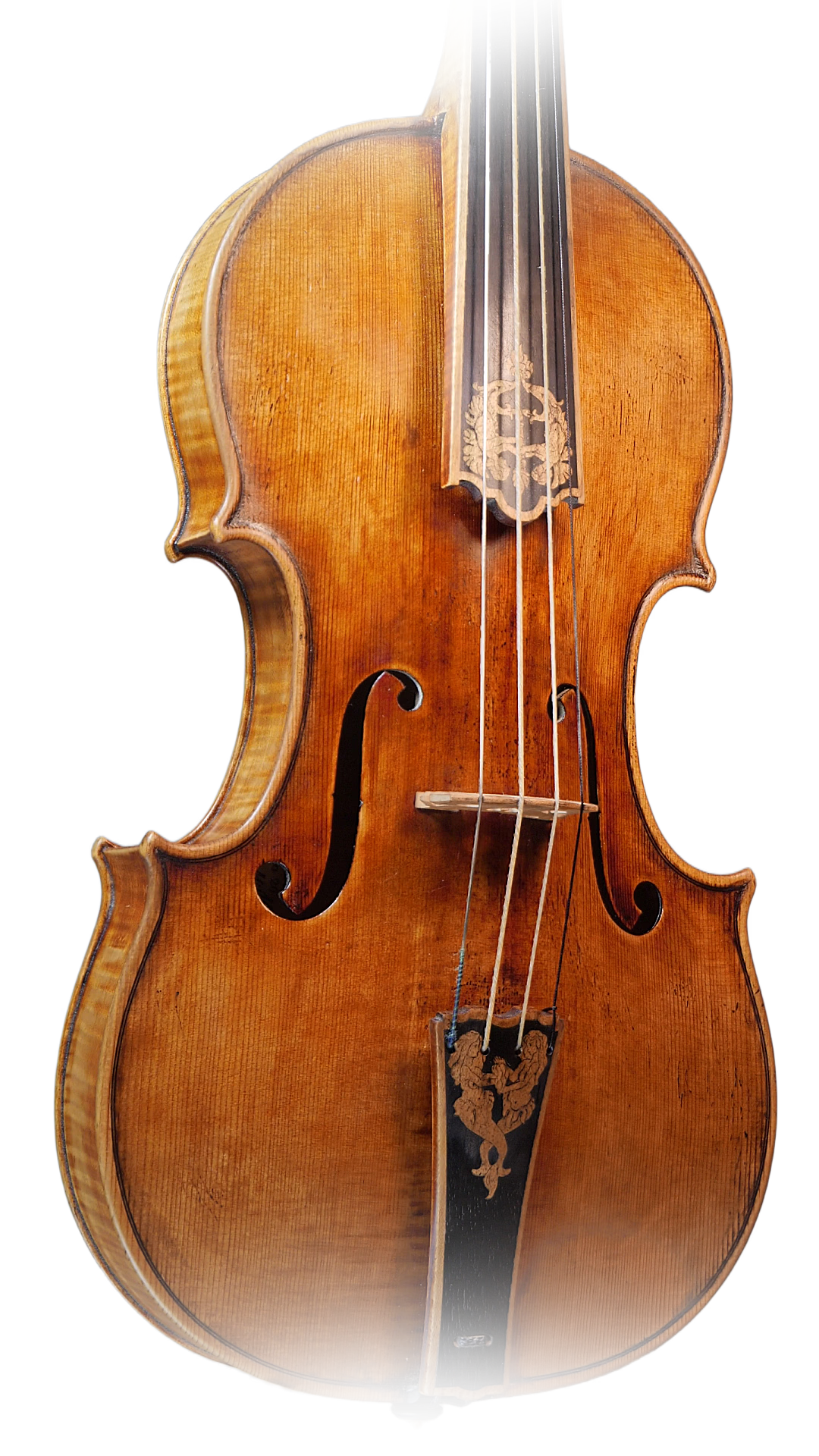
Two violins heard in the same space: an 18th-century Cremonese instrument and the 2013 Art of Fugue Violin. Recorded minutes apart, without balance correction or tonal adjustment.
“How can a new instrument be predictable before it is finished?”
A commission is not guesswork. Before measurements are fixed, Badiarov studies the musician’s repertoire, physical needs, intended sound, setup, pitch, and practical performance context.
This is the role of his harmony-first method: musical relationships are translated into proportion, geometry, response, and voice, so the instrument is shaped with clear musical and physical purpose.
The method has informed repeated commissions for professional musicians including Sigiswald Kuijken, Sergey Malov, and Ryo Terakado.
Witnesses
“I thought it was an antique Italian.”
Viktoria Mullova
Concert violinist
“Dmitry has unique ideas and his violins have distinct characters. Every instrument is different, and I own three of his. I know nobody with his intelligence and originality.”
Ryo Terakado
Concert Violinist, Conductor
“I was especially impressed by the sound of the Badiarov violin. It was most fascinating to find such an intense sound and full of overtones.”
Razvan Stoica
Concert Violinist, Conductor, Producer
“I've been playing my Badiarov violin for two years, and every day I'm even happier with it. It felt comfortable from the first touch, allowed me to play in many different situations, and inspired me to improve my skills. It's constant, reliable, and versatile across climates and music styles.”
Ioan Haffner
Violinist, Member of Orquestra Simfònica del Vallès
“I met Dmitry and heard him play his violin—I immediately loved it. Choosing this instrument was a big decision, but it has become a joyful part of my musical journey, and I am truly happy with it.”
Kaoru Ouchiyama-Koyama
Baroque Violinist, Chamber Musician
“A wonderful violin-maker, a true artist, always in research, never blindly copying anything but following his highest aesthetic standards based on profound knowledge of the whole culture and spirit of the baroque period (among others)… Many thanks, again!”
Sergey Malov
Concert Violinist, Conductor
Commissioning a Violin — The Art of Fugue Model
Each Art of Fugue Violin is made to commission by violin maker Dmitry Badiarov for a specific musician, repertoire, setup, pitch, and physical relationship with the instrument.
Workshop and bespoke versions are available. Investment depends on the model, materials, setup, and artistic requirements.
Commissioning begins with a private conversation.
Made individually for professional use.