Journal
When a Voice Is Taken Away
Continuity, Patronage, and the Musician’s Instrument
January 2026 — The Hague
When an Instrument Becomes Part of the Player
There are moments in a musician’s life when an instrument becomes more than equipment. It becomes part of timing, touch, confidence, phrasing, and identity.
This does not make the instrument mystical. It makes the relationship practical, intimate, and cumulative. Over years of playing, a musician learns where an instrument resists, where it gives, how it carries, how it responds under pressure, and how far it can be trusted.
When that relationship is interrupted, the loss is not only financial or logistical. It affects the continuity of artistic work.
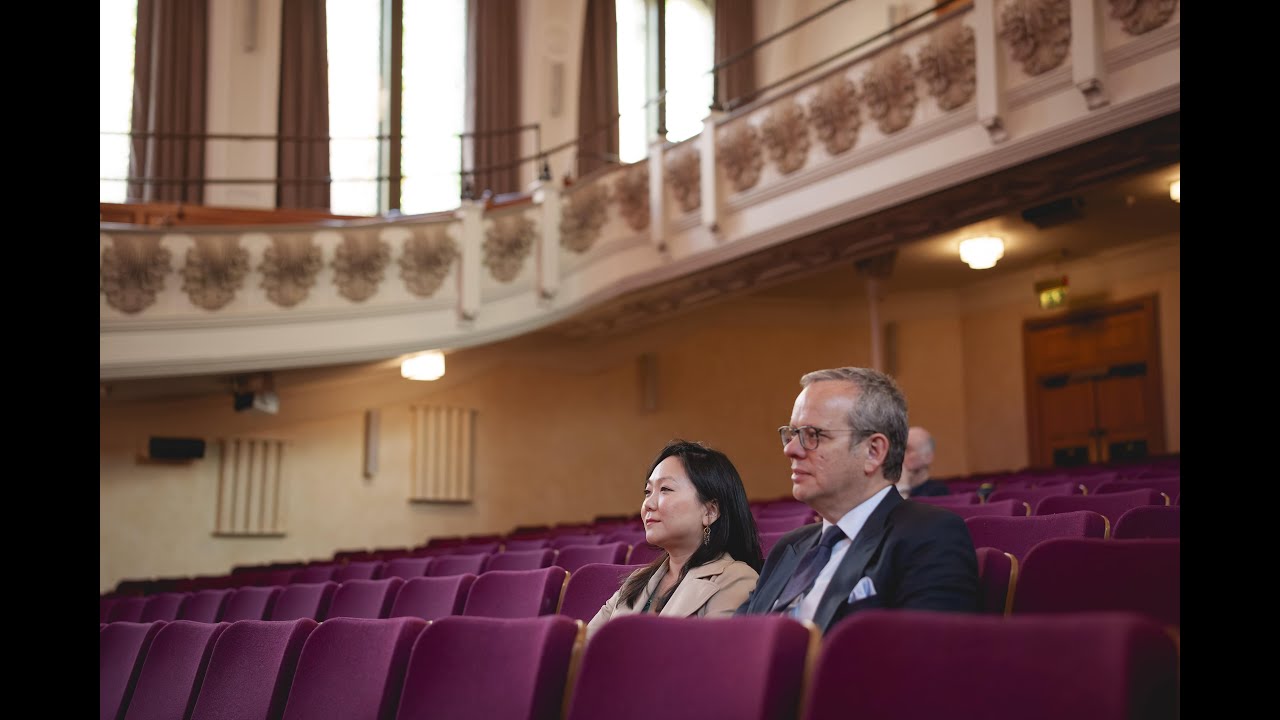
Min Kym speaking about the loss of her Stradivarius.
When an Instrument Becomes Part of the Player
There are moments in a musician’s life when an instrument becomes more than equipment. It becomes part of timing, touch, confidence, phrasing, and identity.
This does not make the instrument mystical. It makes the relationship practical, intimate, and cumulative. Over years of playing, a musician learns where an instrument resists, where it gives, how it carries, how it responds under pressure, and how far it can be trusted.
When that relationship is interrupted, the loss is not only financial or logistical. It affects the continuity of artistic work.
The Vulnerability of a Loaned Voice
Min Kym lived one version of this when her 1696 Stradivarius was stolen in a mundane moment at a sandwich shop. “It was the world’s most expensive sandwich that day,” she has said with dark humour. But the loss was not comic.
For a musician, losing a long-term instrument can mean losing a familiar response, a trusted colour palette, and the physical certainty built through years of playing.
A similar vulnerability exists in another form when a musician depends on a loaned masterpiece. The instrument may become central to their artistic life, yet the relationship remains conditional. A change of ownership, market value, institutional policy, or private decision can end it abruptly.
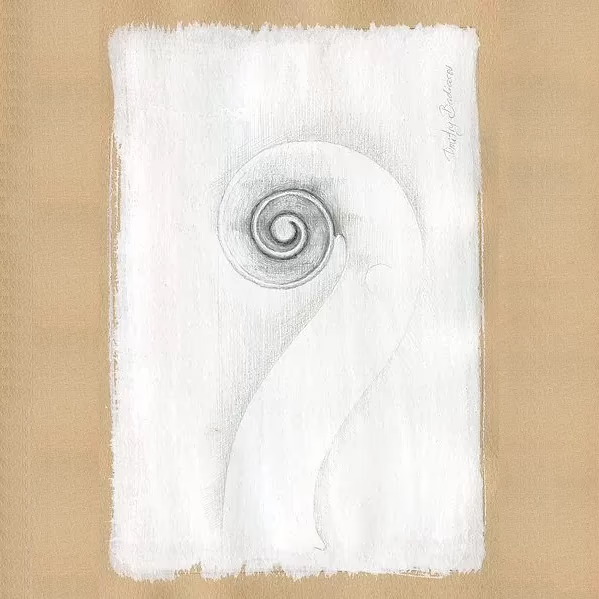
Silver-point drawing by Dmitry Badiarov, made during travel.
The Vulnerability of a Loaned Voice
Min Kym lived one version of this when her 1696 Stradivarius was stolen in a mundane moment at a sandwich shop. “It was the world’s most expensive sandwich that day,” she has said with dark humour. But the loss was not comic.
For a musician, losing a long-term instrument can mean losing a familiar response, a trusted colour palette, and the physical certainty built through years of playing.
A similar vulnerability exists in another form when a musician depends on a loaned masterpiece. The instrument may become central to their artistic life, yet the relationship remains conditional. A change of ownership, market value, institutional policy, or private decision can end it abruptly.
The Phone Call
Then a phone call or email arrives. The instrument’s market value has increased. The loan is ending. The asset will be sold, moved, or reassigned.
From the owner’s point of view, this may be rational. Fine instruments are valuable, and ownership carries its own responsibilities.
From the musician’s point of view, the effect can be severe. The instrument that shaped their sound, stage confidence, and public identity is suddenly no longer available.
This is one of the quiet structural problems in the world of fine instruments: the player may be the person who gives the instrument its living voice, yet the continuity of that voice may depend entirely on someone else’s decision.
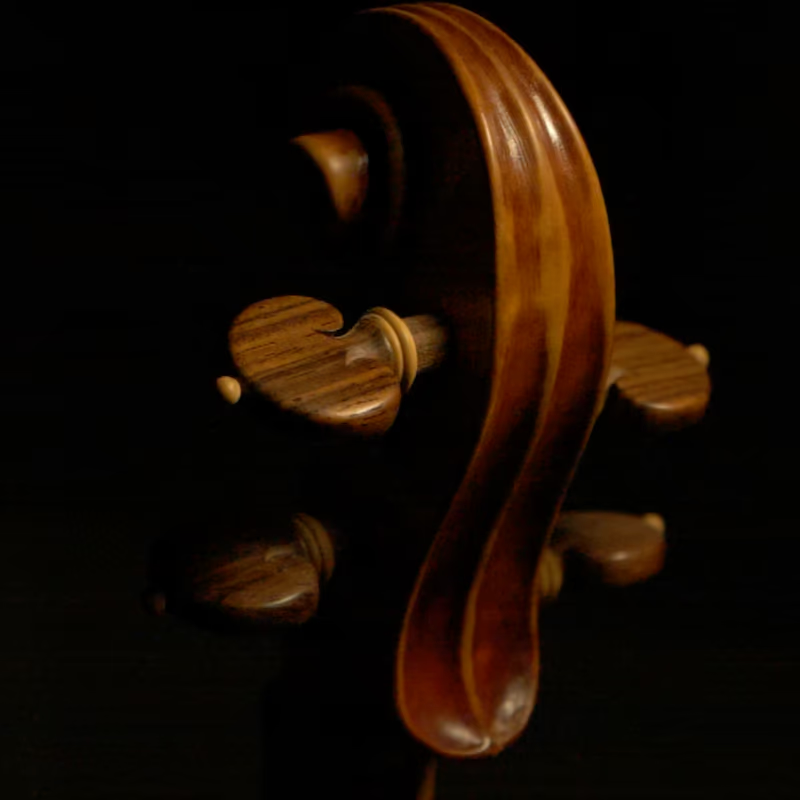
Violin scroll detail in shadow.
The Phone Call
Then a phone call or email arrives. The instrument’s market value has increased. The loan is ending. The asset will be sold, moved, or reassigned.
From the owner’s point of view, this may be rational. Fine instruments are valuable, and ownership carries its own responsibilities.
From the musician’s point of view, the effect can be severe. The instrument that shaped their sound, stage confidence, and public identity is suddenly no longer available.
This is one of the quiet structural problems in the world of fine instruments: the player may be the person who gives the instrument its living voice, yet the continuity of that voice may depend entirely on someone else’s decision.
Patronage as Continuity
A better model begins with continuity.
Patronage at its best is not only access to an expensive object. It is the creation of conditions in which a musician can develop a stable artistic voice over time.
For a maker, this means building around the player rather than around prestige. Repertoire, physical needs, sound ideal, projection, response, pitch environment, and long-term use matter more than symbolic ownership.
For a patron, it means supporting an instrument that remains musically alive: played, heard, maintained, and connected to a real musician rather than held only as an asset.
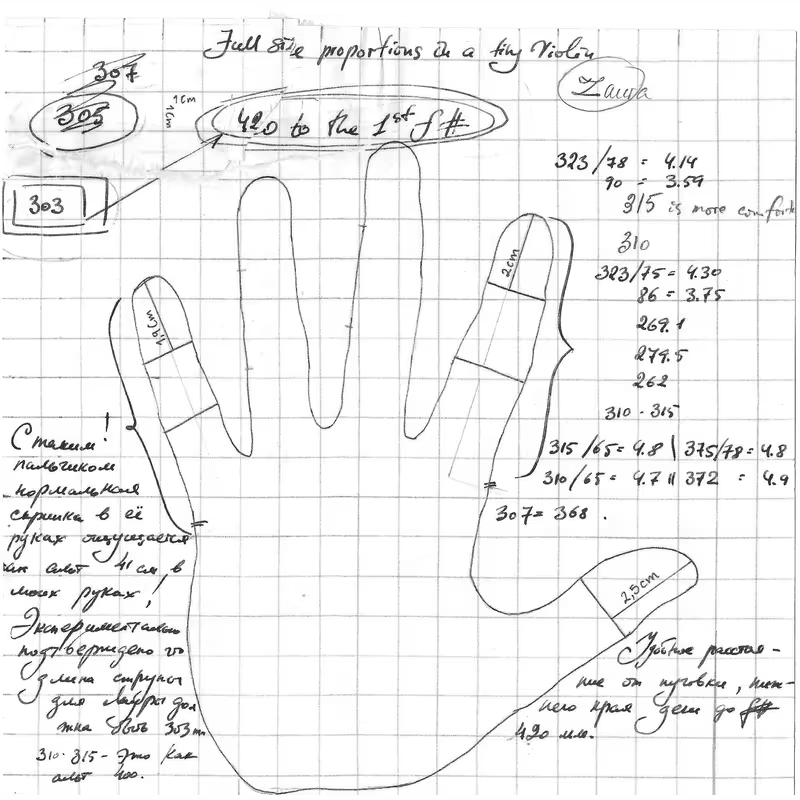
Violinist’s hand with a custom violin by Dmitry Badiarov.
Patronage as Continuity
A better model begins with continuity.
Patronage at its best is not only access to an expensive object. It is the creation of conditions in which a musician can develop a stable artistic voice over time.
For a maker, this means building around the player rather than around prestige. Repertoire, physical needs, sound ideal, projection, response, pitch environment, and long-term use matter more than symbolic ownership.
For a patron, it means supporting an instrument that remains musically alive: played, heard, maintained, and connected to a real musician rather than held only as an asset.
Commissioning a Stable Voice
This is where Badiarov’s harmony-first method becomes practical.
A commissioned instrument can be shaped around the player’s repertoire, body, response needs, pitch environment, and sound ideal. The aim is not to imitate the prestige of a historical instrument. It is to create a new instrument whose proportions, setup, and voice give the musician a stable artistic relationship over time.
For some players, this may mean a historically informed violin or viola. For others, it may mean a violoncello da spalla, a shorter-scale violin, or an instrument adapted to a particular physical and musical need.
The question is concrete: which repertoire, sound, and physical requirements should the instrument be built to serve?
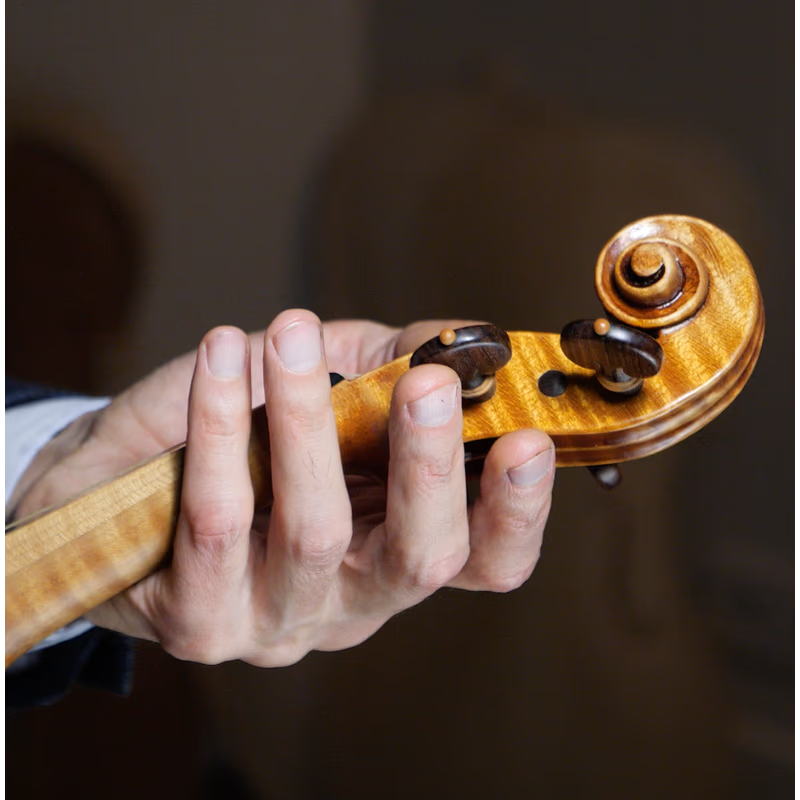
Violin neck detail showing scale, setup, and physical fit.
Commissioning a Stable Voice
This is where Badiarov’s harmony-first method becomes practical.
A commissioned instrument can be shaped around the player’s repertoire, body, response needs, pitch environment, and sound ideal. The aim is not to imitate the prestige of a historical instrument. It is to create a new instrument whose proportions, setup, and voice give the musician a stable artistic relationship over time.
For some players, this may mean a historically informed violin or viola. For others, it may mean a violoncello da spalla, a shorter-scale violin, or an instrument adapted to a particular physical and musical need.
The question is concrete: which repertoire, sound, and physical requirements should the instrument be built to serve?
New Instruments Are Not Second Best
A serious new instrument can serve more than one person. It can support a musician, give a patron’s support lasting musical consequence, and allow craft knowledge to remain active rather than decorative.
To the artist: commissioning an instrument can be a way to secure continuity. Instead of depending indefinitely on access that may be revoked, you begin a relationship with an instrument made for your sound, body, repertoire, and future work.
To the patron: supporting the creation of a new instrument can be more than acquisition. It can place a serious musician in possession of a voice that can develop over years, in public, through use.
The question is not whether the past should be admired. It should. The question is whether living musicians are also given the conditions to continue it.
Bach's Actus Tragicus, a musical source for a development study at Badiarov Violins.
New Instruments Are Not Second Best
A serious new instrument can serve more than one person. It can support a musician, give a patron’s support lasting musical consequence, and allow craft knowledge to remain active rather than decorative.
To the artist: commissioning an instrument can be a way to secure continuity. Instead of depending indefinitely on access that may be revoked, you begin a relationship with an instrument made for your sound, body, repertoire, and future work.
To the patron: supporting the creation of a new instrument can be more than acquisition. It can place a serious musician in possession of a voice that can develop over years, in public, through use.
The question is not whether the past should be admired. It should. The question is whether living musicians are also given the conditions to continue it.