Journal
The Violoncello da Spalla Problem: Acoustics, Playability, and Stringing
Why scale alone does not make a serious shoulder-held cello
March 2026 — The Hague
The Starting Error
There is no shortage of attempts to recreate the violoncello da spalla today. What is often missing is not effort, enthusiasm, or technical skill. What is missing is a coherent understanding of the system the instrument requires.
That distinction is decisive. A form may be copied, measured, traced, and repeated, yet remain misunderstood. One can reproduce an outline without understanding what musical reality it was intended to serve, what stringing logic it requires, or what conception of proportion made such a form possible in the first place. This is where many modern attempts become limited before the instrument has even begun to speak.
My instruments are not replicas of modified originals, nor are they imitations of Hoffmann or Snoeck interpreted through modern habit. They are the result of reading surviving evidence through the combined lens of historical sources, performance practice, string behaviour, proportion, and lived experience as both maker and player.
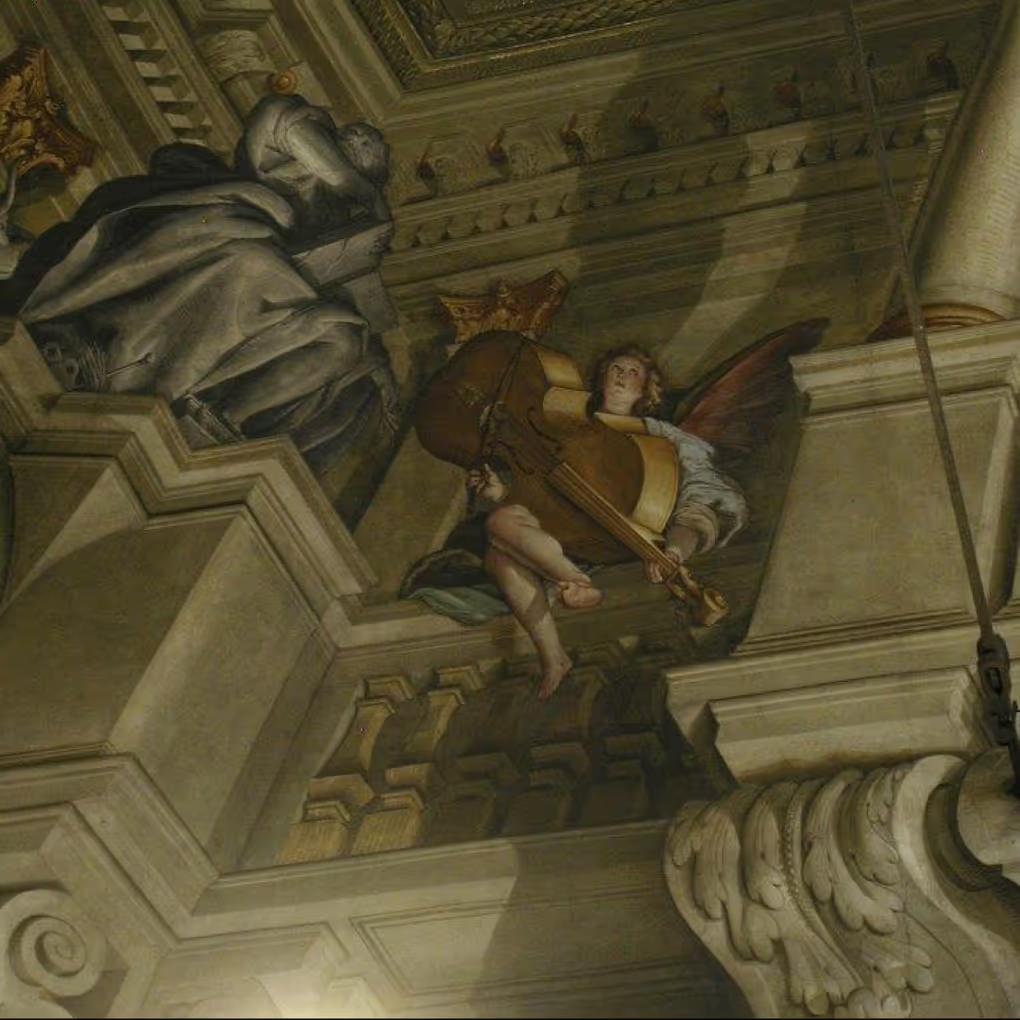
Historical evidence: shoulder-held bass instrument in Barbelli fresco, Crema. Photographed by the author with the kind permission of the priest. St. Maria delle Grazie, Crema, Italy.
The Starting Error
There is no shortage of attempts to recreate the violoncello da spalla today. What is often missing is not effort, enthusiasm, or technical skill. What is missing is a coherent understanding of the system the instrument requires.
That distinction is decisive. A form may be copied, measured, traced, and repeated, yet remain misunderstood. One can reproduce an outline without understanding what musical reality it was intended to serve, what stringing logic it requires, or what conception of proportion made such a form possible in the first place. This is where many modern attempts become limited before the instrument has even begun to speak.
My instruments are not replicas of modified originals, nor are they imitations of Hoffmann or Snoeck interpreted through modern habit. They are the result of reading surviving evidence through the combined lens of historical sources, performance practice, string behaviour, proportion, and lived experience as both maker and player.
The Acoustical Problem
Modern attempts often begin where the instrument ends: with measurement. Lengths are taken, outlines are copied, millimetres are adjusted, and technical comparisons are made. Yet the more difficult question is what gave rise to the form in the first place.
Earlier makers did not work from measurement alone. They worked within traditions where music, proportion, geometry, and practical use were closely related. The maker’s role was not to impose arbitrary form upon matter, but to organise material so that it could serve musical purpose.
This is why the same names appear again and again across disciplines: Plato, Vitruvius, Al Kindi, Al Farabi, the scholars of Ikhwan al-Safa, Alberti, Palladio, Mersenne, Nassarre. They belong to different centuries and fields, yet they share a concern with proportion, harmony, and form. Nassarre writes, “pero guardando la proporcion dicha lo hacen mas sonoros” — by observing proportion, they make them more sonorous. That is not literary ornament. It is instruction.
To say this is not to diminish Stradivari or any other historical master. On the contrary, it is to take them more seriously. Stradivari did not descend from nowhere. He emerged from a culture of thought, proportion, discipline, and musical understanding. To revere the finished object while ignoring the conditions that made it possible is to misunderstand part of its achievement.
The modern approach often begins with the eye. My approach begins with the ear. It begins with music, with the necessity that an instrument must first be imagined as a participant in sound before it is translated into physical form. Technology can measure many things, but measurement alone does not explain why a form works musically.
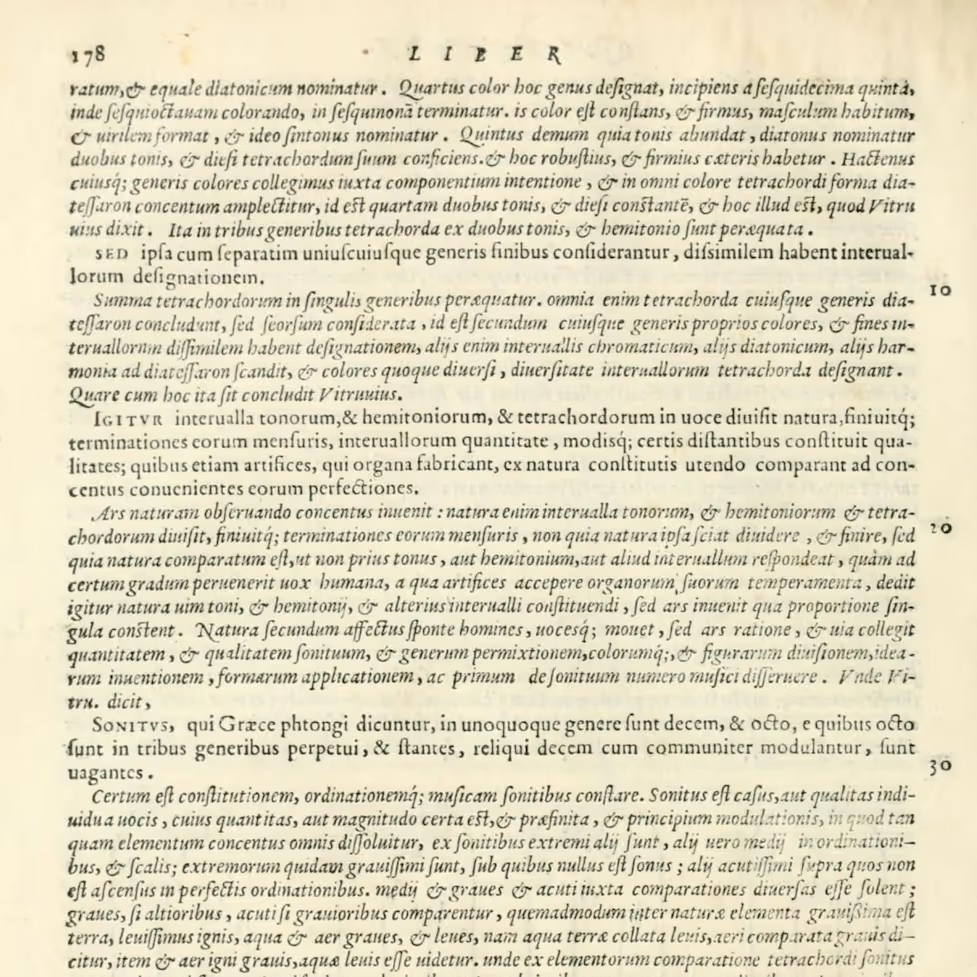
Geometric construction derived from harmonic ratios rather than measured outline: "These are the laws followed by the skilled workmen who fashion musical instruments." — Vitruvius, De Architectura, 1st C BCE
The Acoustical Problem
Modern attempts often begin where the instrument ends: with measurement. Lengths are taken, outlines are copied, millimetres are adjusted, and technical comparisons are made. Yet the more difficult question is what gave rise to the form in the first place.
Earlier makers did not work from measurement alone. They worked within traditions where music, proportion, geometry, and practical use were closely related. The maker’s role was not to impose arbitrary form upon matter, but to organise material so that it could serve musical purpose.
This is why the same names appear again and again across disciplines: Plato, Vitruvius, Al Kindi, Al Farabi, the scholars of Ikhwan al-Safa, Alberti, Palladio, Mersenne, Nassarre. They belong to different centuries and fields, yet they share a concern with proportion, harmony, and form. Nassarre writes, “pero guardando la proporcion dicha lo hacen mas sonoros” — by observing proportion, they make them more sonorous. That is not literary ornament. It is instruction.
To say this is not to diminish Stradivari or any other historical master. On the contrary, it is to take them more seriously. Stradivari did not descend from nowhere. He emerged from a culture of thought, proportion, discipline, and musical understanding. To revere the finished object while ignoring the conditions that made it possible is to misunderstand part of its achievement.
The modern approach often begins with the eye. My approach begins with the ear. It begins with music, with the necessity that an instrument must first be imagined as a participant in sound before it is translated into physical form. Technology can measure many things, but measurement alone does not explain why a form works musically.
The Playability Problem
An instrument is not an object in the abstract. It is a condition of action. It either supports a body in music, or it obstructs it. This is where the second major problem appears.
Many violoncelli da spalla are made by luthiers who have not had to live with the instrument on stage, in rehearsal, in recording, or in dialogue with leading ensembles. They can observe it, copy it, and discuss it. But without bodily experience of the instrument, it is difficult to understand what the technique requires, how the instrument must meet that technique, and what sort of resistance or ease will decide whether a player can truly inhabit it.
I have had to answer this question not only as a maker but as a player. Working with ensembles such as La Petite Bande and Bach Collegium Japan changes the problem entirely. The instrument is no longer an eccentric object. It becomes part of a living musical situation. In that reality, technique is embodied, not theoretical.
This is why some instruments struggle not because they are badly made in a superficial sense, but because they are made without a lived understanding of use. One can build a respectable object and still produce an instrument that quietly fights the musician at every important moment.
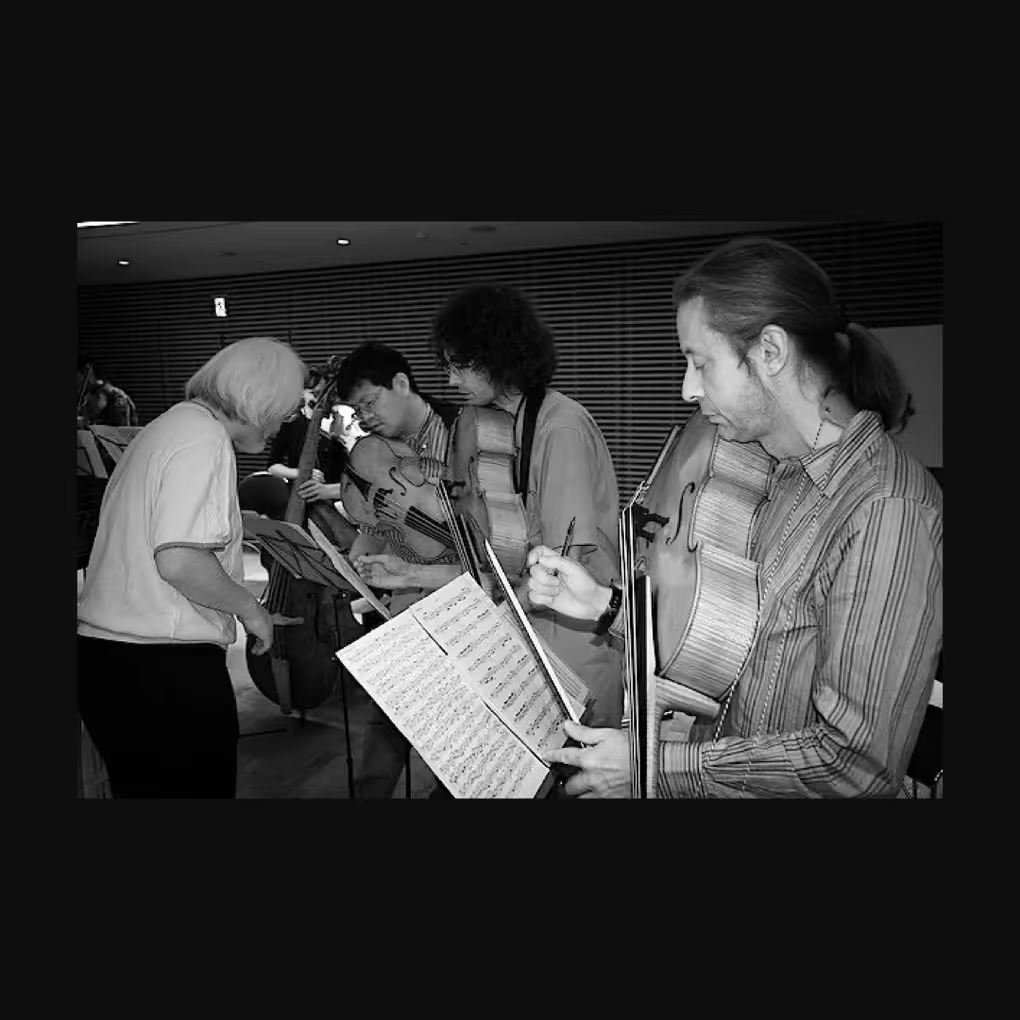
Bach Collegium Japan, Tokyo 2008 — Suzuki, Terakado, Badiarov, Fernandez. Three violoncelli da spalla by Dmitry Badiarov in a rehearsal context. Brandenburg Concerti.
The Playability Problem
An instrument is not an object in the abstract. It is a condition of action. It either supports a body in music, or it obstructs it. This is where the second major problem appears.
Many violoncelli da spalla are made by luthiers who have not had to live with the instrument on stage, in rehearsal, in recording, or in dialogue with leading ensembles. They can observe it, copy it, and discuss it. But without bodily experience of the instrument, it is difficult to understand what the technique requires, how the instrument must meet that technique, and what sort of resistance or ease will decide whether a player can truly inhabit it.
I have had to answer this question not only as a maker but as a player. Working with ensembles such as La Petite Bande and Bach Collegium Japan changes the problem entirely. The instrument is no longer an eccentric object. It becomes part of a living musical situation. In that reality, technique is embodied, not theoretical.
This is why some instruments struggle not because they are badly made in a superficial sense, but because they are made without a lived understanding of use. One can build a respectable object and still produce an instrument that quietly fights the musician at every important moment.
The String Problem
There is a further issue, often underestimated: the string problem.
The violoncello da spalla cannot function with standard solutions. Not viola strings, not ordinary cello strings, and not improvised substitutions meant for guitars, harps, or other instruments. The instrument requires dedicated string logic corresponding to its scale, tension, response, and acoustical intention. Without that, the entire idea suffers.
The result is predictable: instruments that do not respond properly, do not project, do not carry their resonance convincingly, and frustrate players who might otherwise have understood the instrument’s potential. Then an uninformed conclusion is drawn: the instrument itself must not be viable.
That conclusion is false. What is not viable is the method used to produce it. If the stringing logic is wrong, everything built upon it is compromised. The whole idea is then made to appear unworthy of serious attention, when in reality it has merely been badly served.
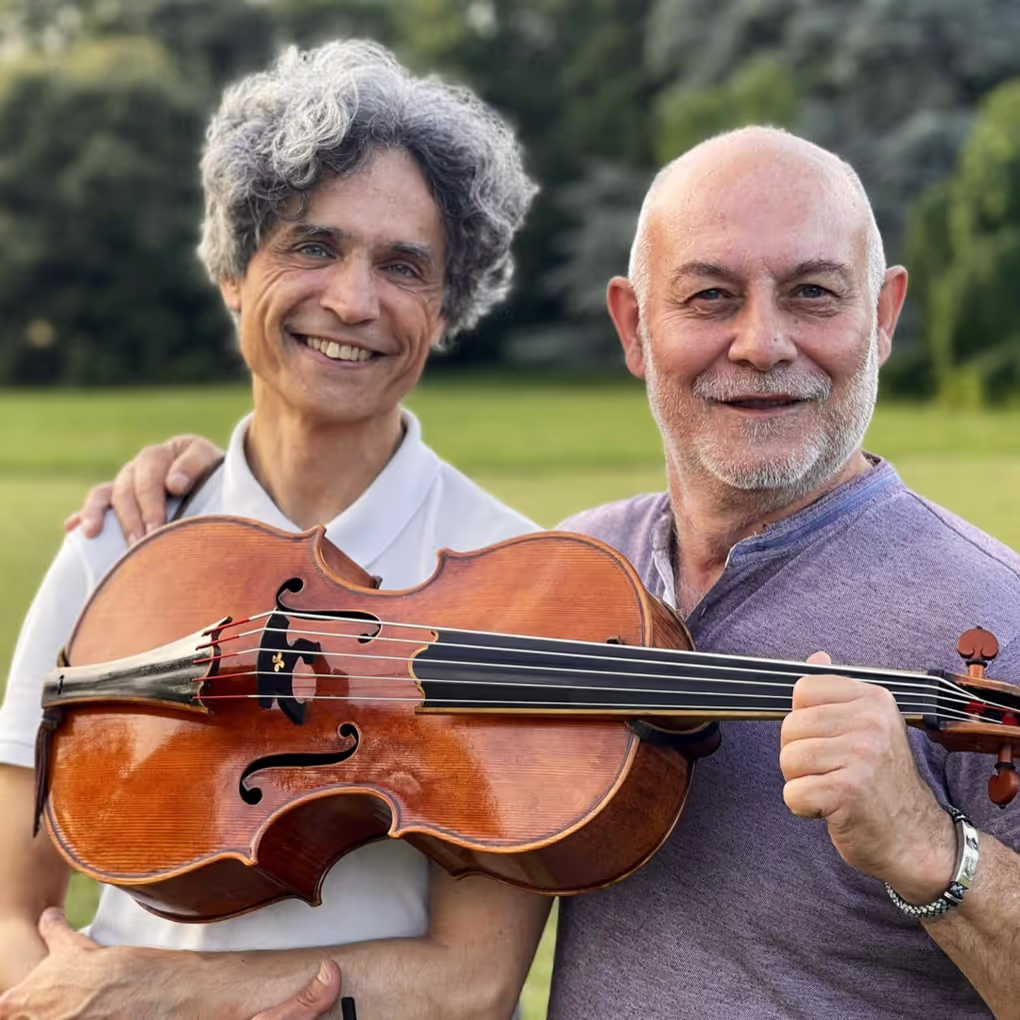
Vicenza, 2024. Dmitry Badiarov working with string maker Mimmo Peruffo in Vicenza, continuing violoncello da spalla string development begun in 2003.
The String Problem
There is a further issue, often underestimated: the string problem.
The violoncello da spalla cannot function with standard solutions. Not viola strings, not ordinary cello strings, and not improvised substitutions meant for guitars, harps, or other instruments. The instrument requires dedicated string logic corresponding to its scale, tension, response, and acoustical intention. Without that, the entire idea suffers.
The result is predictable: instruments that do not respond properly, do not project, do not carry their resonance convincingly, and frustrate players who might otherwise have understood the instrument’s potential. Then an uninformed conclusion is drawn: the instrument itself must not be viable.
That conclusion is false. What is not viable is the method used to produce it. If the stringing logic is wrong, everything built upon it is compromised. The whole idea is then made to appear unworthy of serious attention, when in reality it has merely been badly served.
The Depth Problem
At a certain point, the problem becomes more fundamental still. It is no longer simply about acoustics or playability. It becomes a question of whether one understands what sort of knowledge one is dealing with.
I once asked a respected contemporary maker what unit of measurement the old masters used. There was no answer. In architecture the answer is clear: the modulus. In instrument making it is also clear, but not fixed in the same way. Here the modulus is string length, and from it arise proportion, interval relationships, resonances, and overtones. In other words, the instrument is not measured into existence. It is derived from relationships.
This is where the modern mentality reveals its limitation. It assumes that if enough measurements are gathered, understanding will follow. But measurement is only the surface residue of a prior logic. Measurement can preserve the trace of a form, but it cannot explain the intelligence that generated it. If the generating principle is not understood, then one remains trapped at the level of description. One can repeat the external marks of intelligence without possessing the logic that generated them.
That is why I say: training a parrot to repeat Socrates does not make it Socrates. The point is not imitation. The point is understanding the order from which form proceeds.
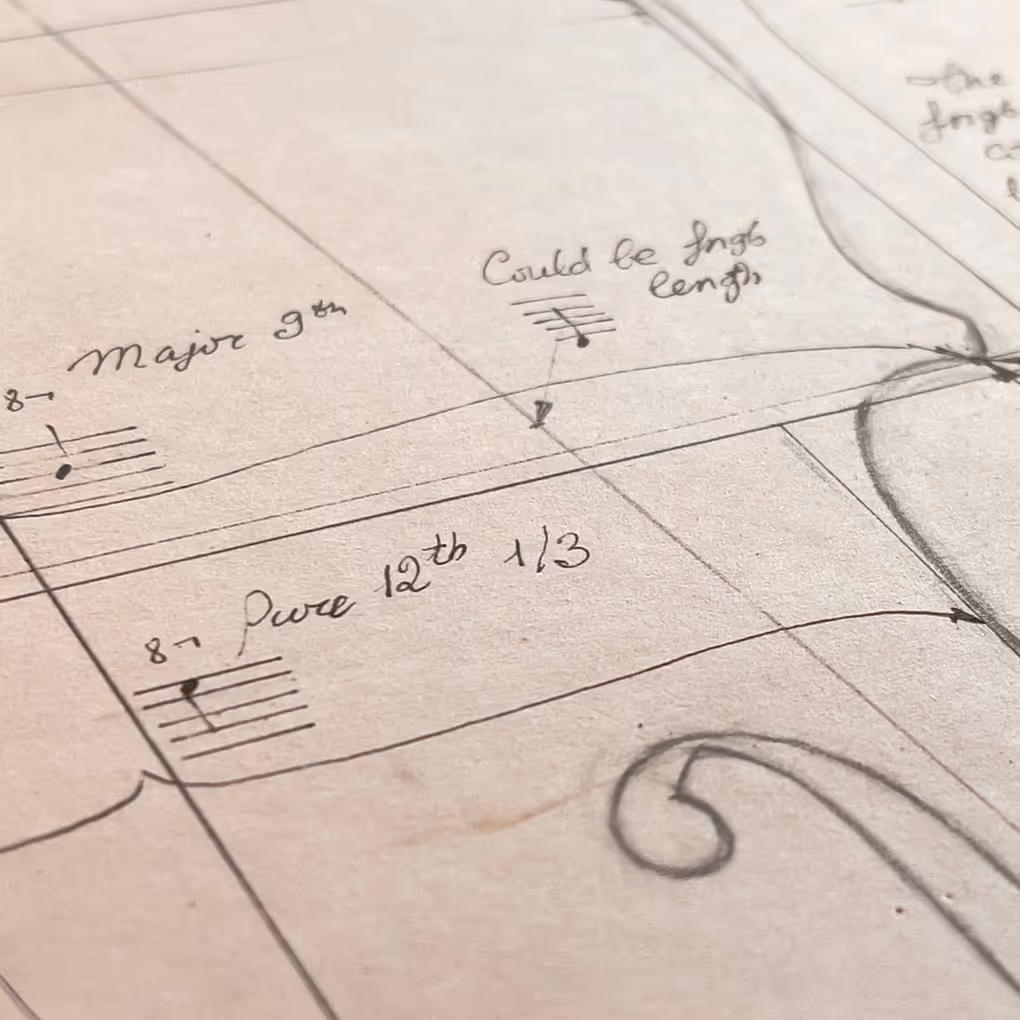
Turning harmony into shape: the process of design from musical relationship to physical form.
The Depth Problem
At a certain point, the problem becomes more fundamental still. It is no longer simply about acoustics or playability. It becomes a question of whether one understands what sort of knowledge one is dealing with.
I once asked a respected contemporary maker what unit of measurement the old masters used. There was no answer. In architecture the answer is clear: the modulus. In instrument making it is also clear, but not fixed in the same way. Here the modulus is string length, and from it arise proportion, interval relationships, resonances, and overtones. In other words, the instrument is not measured into existence. It is derived from relationships.
This is where the modern mentality reveals its limitation. It assumes that if enough measurements are gathered, understanding will follow. But measurement is only the surface residue of a prior logic. Measurement can preserve the trace of a form, but it cannot explain the intelligence that generated it. If the generating principle is not understood, then one remains trapped at the level of description. One can repeat the external marks of intelligence without possessing the logic that generated them.
That is why I say: training a parrot to repeat Socrates does not make it Socrates. The point is not imitation. The point is understanding the order from which form proceeds.
The Break
I did not arrive at this approach gradually through academic preference. I arrived at it through rupture.
In 1992, my first violin unexpectedly received a diploma at a competition. What struck me was not success, but the astonishing uniformity around me. Everyone repeated the same Strad pattern. Everyone accepted the same assumptions. Yet almost no one seemed able to answer the simplest question: why does the instrument have this shape?
That moment forced a break. I abandoned the modern approach because I could not continue participating in a culture of repetition without understanding. I began to seek elsewhere—not for novelty, but for origin. What I was looking for was not another model, but the principle by which form becomes necessary.
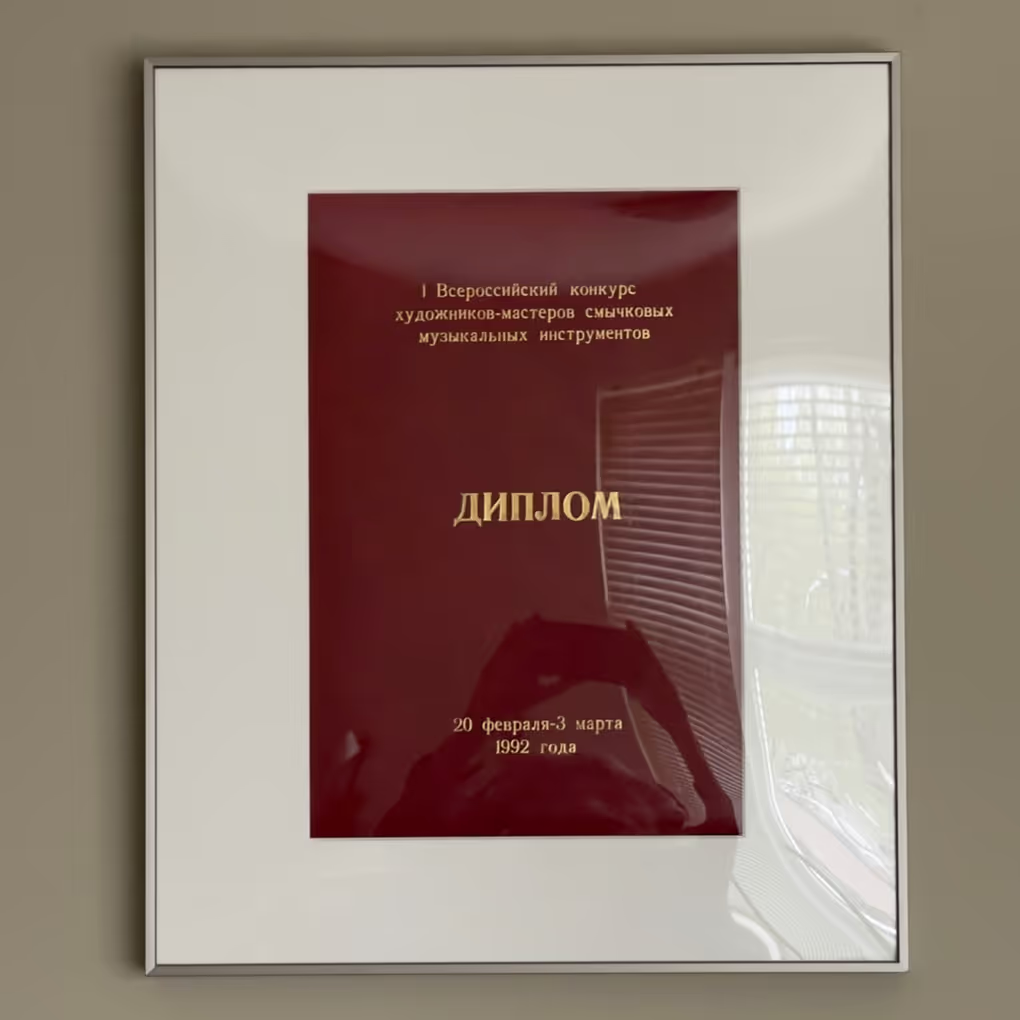
The event that led to an immediate pivot: away from repeating the dominant model and toward seeking the principle that made the form possible.
The Break
I did not arrive at this approach gradually through academic preference. I arrived at it through rupture.
In 1992, my first violin unexpectedly received a diploma at a competition. What struck me was not success, but the astonishing uniformity around me. Everyone repeated the same Strad pattern. Everyone accepted the same assumptions. Yet almost no one seemed able to answer the simplest question: why does the instrument have this shape?
That moment forced a break. I abandoned the modern approach because I could not continue participating in a culture of repetition without understanding. I began to seek elsewhere—not for novelty, but for origin. What I was looking for was not another model, but the principle by which form becomes necessary.
The Rostropovich Question
The deeper origin lies earlier still. In 1989, standing in the ruins of a two-thousand-year-old theatre of extraordinary acoustical power, I asked Mstislav Rostropovich why it sounded so convincing—better, in many respects, than some modern halls built by today’s experts in acoustics.
He answered with a question: “What if the ancient masters knew something we simply forgot?”
That question has stayed with me ever since. It was not a slogan. It was a direction. From that point on, the search ceased to be for improved surfaces or clever technical variations. It became a search for the relationship between sound, proportion, culture, and the human body.
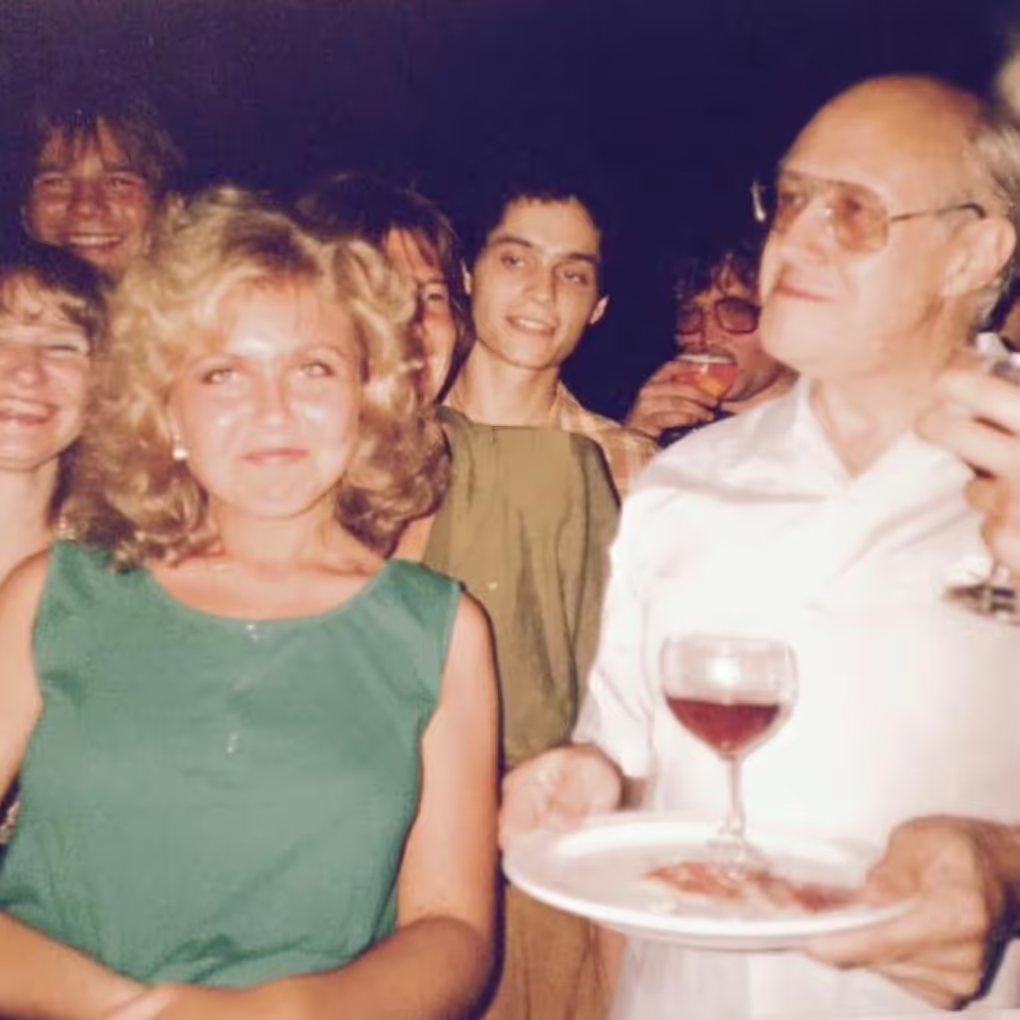
Spain, 1989. With Mstislav Rostropovich and members of the orchestra. It was around this time that a single question emerged: what if the ancient masters knew something we have forgotten?
The Rostropovich Question
The deeper origin lies earlier still. In 1989, standing in the ruins of a two-thousand-year-old theatre of extraordinary acoustical power, I asked Mstislav Rostropovich why it sounded so convincing—better, in many respects, than some modern halls built by today’s experts in acoustics.
He answered with a question: “What if the ancient masters knew something we simply forgot?”
That question has stayed with me ever since. It was not a slogan. It was a direction. From that point on, the search ceased to be for improved surfaces or clever technical variations. It became a search for the relationship between sound, proportion, culture, and the human body.
What This Means Today
There are many instruments. There are fewer that emerge from a coherent system, support the body of the player, and allow music to exist without resistance. That is the difference between replication and understanding, between surface and origin.
My work proceeds through what I call Sound Alchemy: a harmony-first design method that studies sources, musical relationships, proportion, physical response, and performance use as one connected problem.
This article must be read carefully. It is not an invitation to reject the great masters, nor to look down on them, nor to pretend that reverence itself is weakness. Quite the opposite. It is an invitation to revere them more deeply: not merely as products to be copied, traded, or worshipped as prestige objects, but as expressions of a much older and larger order of musical and material knowledge.
Nor is this fundamentally about seeking an individual style in the modern sense, as though originality were the highest good. The deeper task is more difficult: to understand the musical and structural relationships that make form necessary. Some historical makers found unmistakable individuality through that discipline. The modern world often reverses the order, seeking signature before understanding.
Many approaches today rely on repetition of forms without understanding the principles that generated them. Repetition alone does not lead to insight. The work begins elsewhere—and it demands more than imitation or even the most sophisticated technology.
Closing
What has been described here either appears in sound—or it does not.
“Training a parrot to repeat Socrates does not make it Socrates.”
This is not a metaphor. It is a practical instruction I inherited from my professor Mark Komissarov at the St. Petersburg Conservatoire. He insisted that we never listen in order to copy. The task was always the same: understand first, then play. Without understanding, repetition is empty.
Komissarov stands within a lineage that does not begin with him, nor with me, nor with what is often called the “Russian school.” It reaches back through Auer, Joachim, Viotti, Pugnani, Somis—to Corelli. The name is secondary. What matters is continuity: an attempt to align sound, proportion, playing technique, and musical use.
This article is written from within that continuity.
You may approach it as information. Or you may recognise it as an invitation to look beyond copied outlines and ask what kind of musical understanding makes an instrument work.
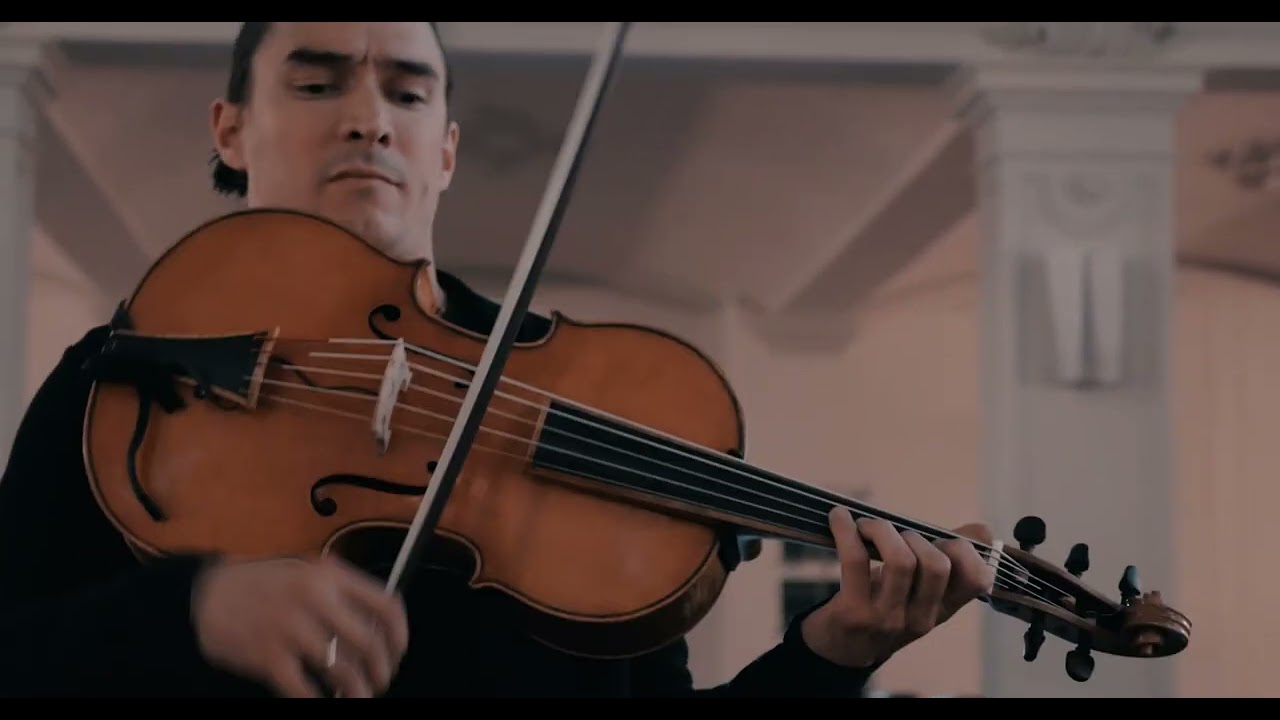
Sergey Malov performing on a violoncello da spalla - The Art of Fugue model by Dmitry Badiarov, built in 2012.
Closing
What has been described here either appears in sound—or it does not.
“Training a parrot to repeat Socrates does not make it Socrates.”
This is not a metaphor. It is a practical instruction I inherited from my professor Mark Komissarov at the St. Petersburg Conservatoire. He insisted that we never listen in order to copy. The task was always the same: understand first, then play. Without understanding, repetition is empty.
Komissarov stands within a lineage that does not begin with him, nor with me, nor with what is often called the “Russian school.” It reaches back through Auer, Joachim, Viotti, Pugnani, Somis—to Corelli. The name is secondary. What matters is continuity: an attempt to align sound, proportion, playing technique, and musical use.
This article is written from within that continuity.
You may approach it as information. Or you may recognise it as an invitation to look beyond copied outlines and ask what kind of musical understanding makes an instrument work.