Journal
Violoncello da Spalla: Maker, Modern Revival, and Commissioning
What the instrument is, how its modern revival began, and how to commission one today
March 2026 — The Hague
What Is a Violoncello da Spalla?
The violoncello da spalla is a small cello, usually with five strings, played against the shoulder rather than between the knees. For some musicians, it opens forgotten repertoire, a new way of hearing Bach, chamber music, Basso Continuo, solo and obbligato, the relationship between bass line and melodic line. For violinists and violists in particular, it can become not only a historical curiosity, but a deeply artistic and practical endeavour.
I have been building the violoncello da spalla since the modern revival began in 2003–2004. What started as a question from a leading musician became months of research, technical uncertainty, custom string development, and one of the defining turning points of my life as a maker and performer. This page brings together what many searchers are actually looking for in one place: what a violoncello da spalla is, how its modern revival began, what makes it different from a cello, and how to commission one today.
If you are looking for a violoncello da spalla maker, or wondering whether a violoncello da spalla is for sale, you are in the right place.
A violoncello da spalla is a shoulder-held cello, historically associated with the wider and less standardised family of small bass instruments used in the seventeenth and eighteenth centuries. Today, the term is used for a compact cello-scale instrument, often with five strings tuned C–G–D–A–E, attached with a strap or belt and played against the right shoulder or chest.
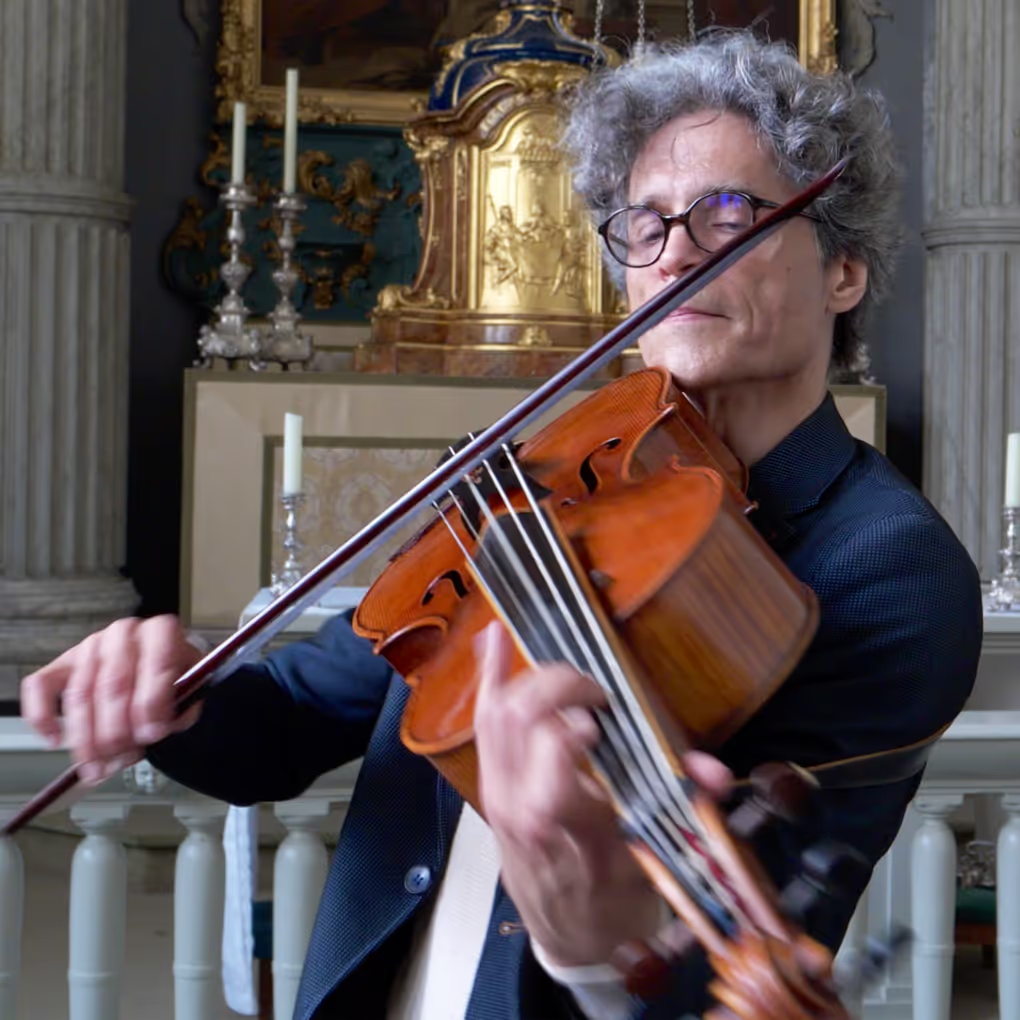
Violoncello da spalla close-up showing five-string setup and playing position
What Is a Violoncello da Spalla?
The violoncello da spalla is a small cello, usually with five strings, played against the shoulder rather than between the knees. For some musicians, it opens forgotten repertoire, a new way of hearing Bach, chamber music, Basso Continuo, solo and obbligato, the relationship between bass line and melodic line. For violinists and violists in particular, it can become not only a historical curiosity, but a deeply artistic and practical endeavour.
I have been building the violoncello da spalla since the modern revival began in 2003–2004. What started as a question from a leading musician became months of research, technical uncertainty, custom string development, and one of the defining turning points of my life as a maker and performer. This page brings together what many searchers are actually looking for in one place: what a violoncello da spalla is, how its modern revival began, what makes it different from a cello, and how to commission one today.
If you are looking for a violoncello da spalla maker, or wondering whether a violoncello da spalla is for sale, you are in the right place.
A violoncello da spalla is a shoulder-held cello, historically associated with the wider and less standardised family of small bass instruments used in the seventeenth and eighteenth centuries. Today, the term is used for a compact cello-scale instrument, often with five strings tuned C–G–D–A–E, attached with a strap or belt and played against the right shoulder or chest.
Historical Names and Terminology
In the past, this instrument was known under many different names, the most common being “violoncello”. Simply violoncello, even without the modifier “piccolo”. This is evident from Bach’s 6th suite — a piece of music for a five-stringed instrument, not a “piccolo”, to an obviously “piccolo” — by today’s standards — yet not called as such by violoncellist Carlo Buffagnotti in the late 17th–early 18th centuries, who also happened to be an important engraver of music.
Why do we call it a violoncello da spalla today? It has never been my intention as it is a historically inaccurate term. But the modern audiences and musicians chose this term for their convenience in order to draw a clear distinction between the modern day vertically held large cello and the violoncello da spalla.
Unlike the modern cello, it does not depend on an endpin and a seated posture between the knees. Unlike the viola, it speaks in the cello range. For the right musician, it combines the immediacy of the violin family with the depth and resonance of a bass instrument.
For audiences, the effect often ranges from surprise — the instrument sounds at once familiar and unexpected — to a clearer sense of how bass line, melody, and physical gesture can belong together. For performers, its significance is practical and musical: the violoncello da spalla opens repertoire and changes phrasing, articulation, colour, balance, and physical relationship to the bass line.
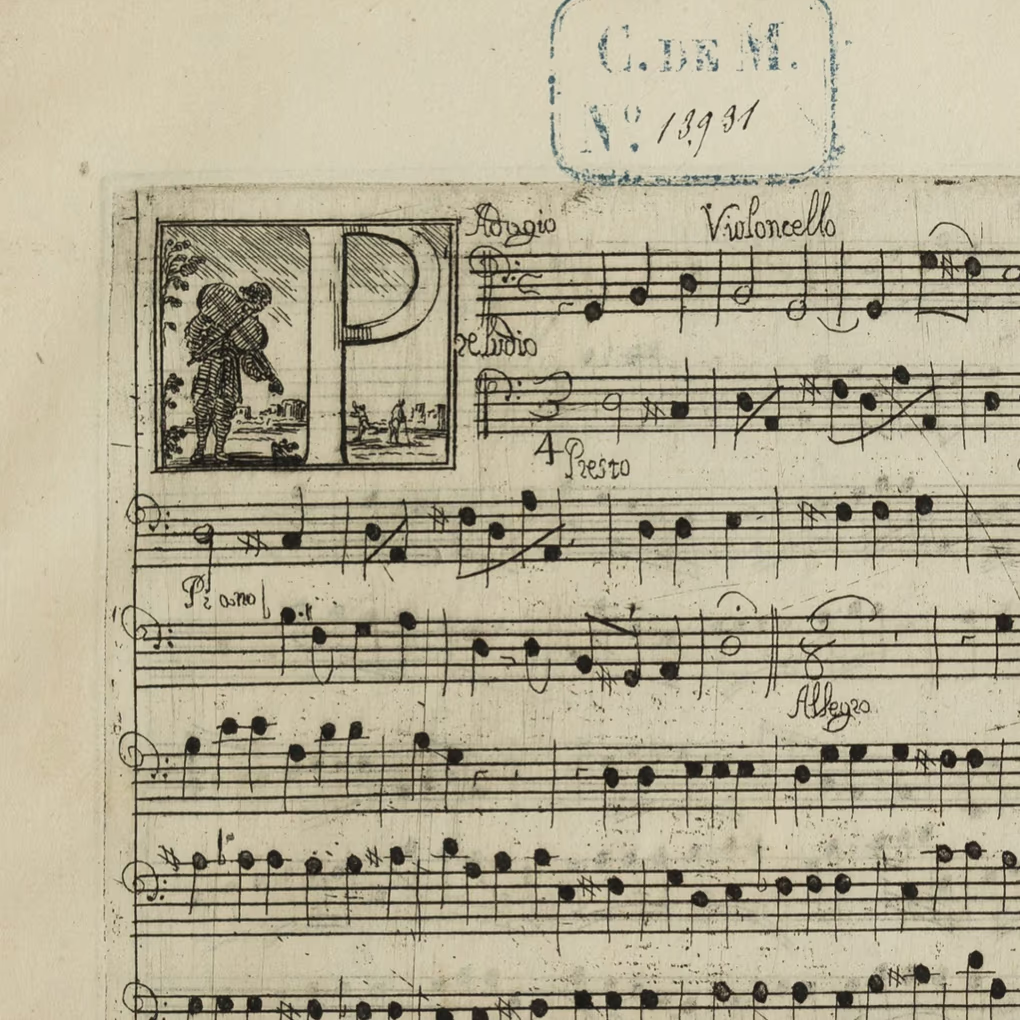
Historical source associated with Carlo Buffagnotti and early use of the term violoncello
Historical Names and Terminology
In the past, this instrument was known under many different names, the most common being “violoncello”. Simply violoncello, even without the modifier “piccolo”. This is evident from Bach’s 6th suite — a piece of music for a five-stringed instrument, not a “piccolo”, to an obviously “piccolo” — by today’s standards — yet not called as such by violoncellist Carlo Buffagnotti in the late 17th–early 18th centuries, who also happened to be an important engraver of music.
Why do we call it a violoncello da spalla today? It has never been my intention as it is a historically inaccurate term. But the modern audiences and musicians chose this term for their convenience in order to draw a clear distinction between the modern day vertically held large cello and the violoncello da spalla.
Unlike the modern cello, it does not depend on an endpin and a seated posture between the knees. Unlike the viola, it speaks in the cello range. For the right musician, it combines the immediacy of the violin family with the depth and resonance of a bass instrument.
For audiences, the effect often ranges from surprise — the instrument sounds at once familiar and unexpected — to a clearer sense of how bass line, melody, and physical gesture can belong together. For performers, its significance is practical and musical: the violoncello da spalla opens repertoire and changes phrasing, articulation, colour, balance, and physical relationship to the bass line.
The Beginning of the Modern Revival
The modern revival of the violoncello da spalla did not begin as a musicological idea. It began as a difficult practical question in this Brussels apartment in 2003.
In 2003, after a concert in Bilbao, Sigiswald Kuijken asked me whether such an instrument had really existed and whether I believed it could be made again. The question was simple; the consequences were not. At that point I was still building my reputation as a luthier. Accepting such a challenge meant risking years of work, money, credibility, and the possibility of complete failure in full view of a legendary musician, his worldwide audience, and hundreds of baroque violin students he trained.
I did not answer immediately.
Back in my hotel room, I dialled my friend Mimmo Peruffo — a leading historical string expert — asking what he thought about accepting this challenge from the point of view of the physical properties of strings for such an instrument, because obviously we could not just string it with normal strings and expect it to work. His answer was positive. Thus began what would become months of research and experimentation. The central problem was not only historical form. It was acoustical viability and practical playability. A shoulder-held instrument in the cello range is not something one simply “makes smaller.” If proportions, strings, response, tension, and setup are wrong, the result is not an unusual voice. It is an unplayable embarrassment.
That was the true beginning of the modern revival: not a slogan, not a brief research exercise for the sake of a good-looking Instagram post, but a genuine technical and musical problem whose solution was uncertain.
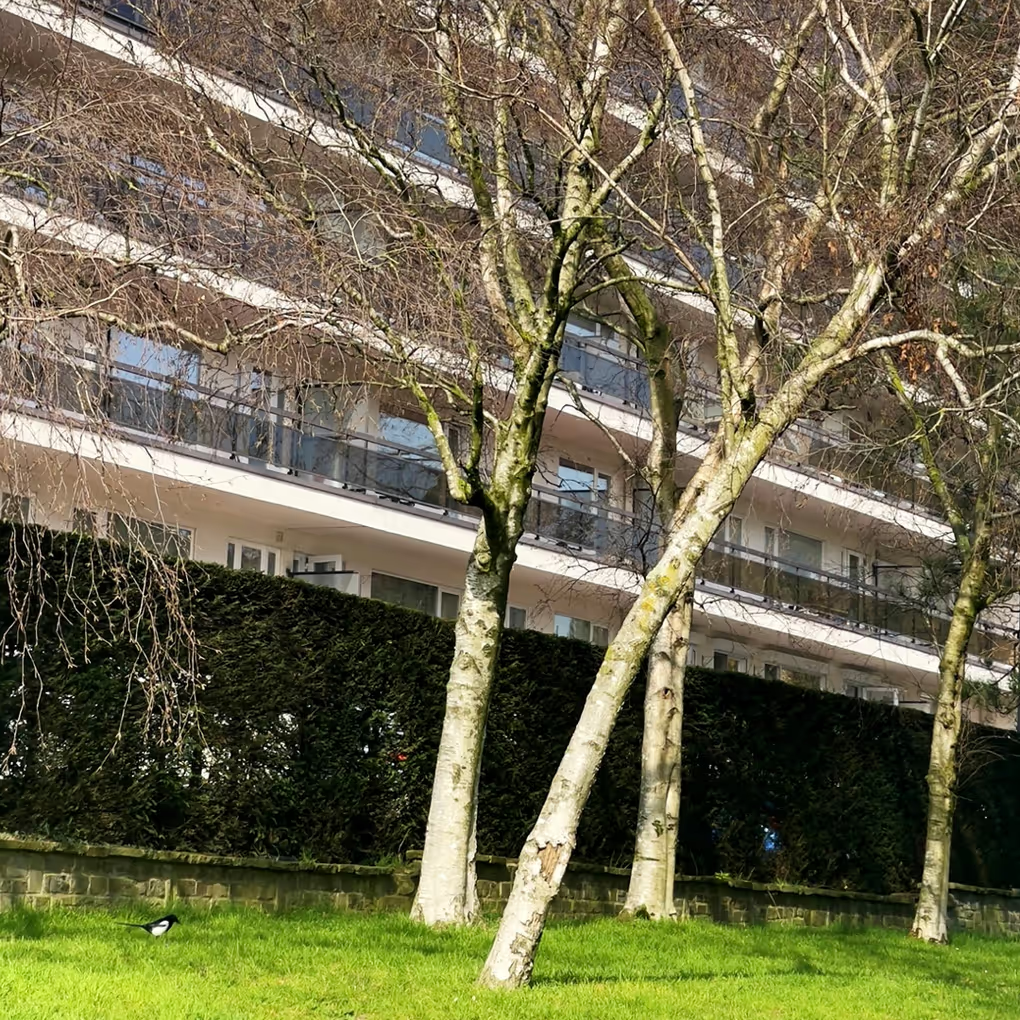
Brussels apartment building where the modern revival of the violoncello da spalla began in 2003–2004
The Beginning of the Modern Revival
The modern revival of the violoncello da spalla did not begin as a musicological idea. It began as a difficult practical question in this Brussels apartment in 2003.
In 2003, after a concert in Bilbao, Sigiswald Kuijken asked me whether such an instrument had really existed and whether I believed it could be made again. The question was simple; the consequences were not. At that point I was still building my reputation as a luthier. Accepting such a challenge meant risking years of work, money, credibility, and the possibility of complete failure in full view of a legendary musician, his worldwide audience, and hundreds of baroque violin students he trained.
I did not answer immediately.
Back in my hotel room, I dialled my friend Mimmo Peruffo — a leading historical string expert — asking what he thought about accepting this challenge from the point of view of the physical properties of strings for such an instrument, because obviously we could not just string it with normal strings and expect it to work. His answer was positive. Thus began what would become months of research and experimentation. The central problem was not only historical form. It was acoustical viability and practical playability. A shoulder-held instrument in the cello range is not something one simply “makes smaller.” If proportions, strings, response, tension, and setup are wrong, the result is not an unusual voice. It is an unplayable embarrassment.
That was the true beginning of the modern revival: not a slogan, not a brief research exercise for the sake of a good-looking Instagram post, but a genuine technical and musical problem whose solution was uncertain.
The First Prototype in White
The first instrument took shape slowly. Months of research emerged into drawings, drawings into wood, then into an unvarnished form that I could hold in my hands.
Working in that Brussels apartment, I remember the particular quality of light in the room, the modern urban view, and the historically informed approach in stark contrast to it, as well as the growing realisation that this was not just another instrument. It was a big question made physical. Would it work? Would it speak? Would the historically informed approach — now described on the harmony-first method page — prove itself here, or would it remain a beautiful but silent object?
The white instrument stage is a vulnerable moment in any maker's process. At this stage, the instrument is pure potential — it has form but not yet voice. Making this instrument before I or anyone knew how it would sound or how it would be played made it all the more uncertain. This uncertainty, plus responsibility, led to exhausting library work in Brussels, The Hague, and London, as well as many trips to collections in Leipzig, Brussels, and Paris. It was months of work without any guarantee that it would succeed.
Holding that first white instrument in 2003, I felt both the weight of the challenge and the possibility that the instrument might work.
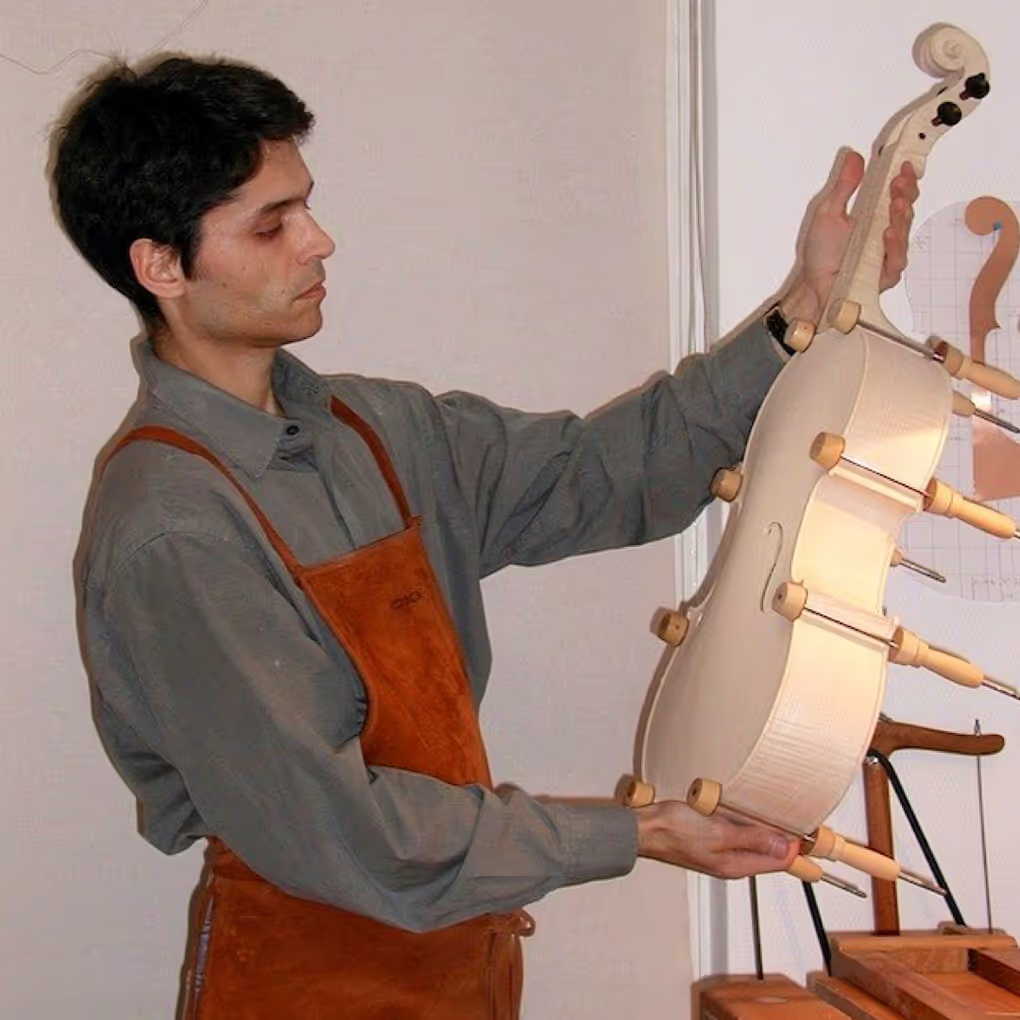
Dmitry Badiarov in Brussels in 2003 with the first violoncello da spalla still in white before varnishing
The First Prototype in White
The first instrument took shape slowly. Months of research emerged into drawings, drawings into wood, then into an unvarnished form that I could hold in my hands.
Working in that Brussels apartment, I remember the particular quality of light in the room, the modern urban view, and the historically informed approach in stark contrast to it, as well as the growing realisation that this was not just another instrument. It was a big question made physical. Would it work? Would it speak? Would the historically informed approach — now described on the harmony-first method page — prove itself here, or would it remain a beautiful but silent object?
The white instrument stage is a vulnerable moment in any maker's process. At this stage, the instrument is pure potential — it has form but not yet voice. Making this instrument before I or anyone knew how it would sound or how it would be played made it all the more uncertain. This uncertainty, plus responsibility, led to exhausting library work in Brussels, The Hague, and London, as well as many trips to collections in Leipzig, Brussels, and Paris. It was months of work without any guarantee that it would succeed.
Holding that first white instrument in 2003, I felt both the weight of the challenge and the possibility that the instrument might work.
Why Bringing the Instrument Back to Life Was Difficult
To understand why the violoncello da spalla is rare, it helps to understand why we lost it. With the standardisation of instruments that came at the end of the 18th century, followed by narrow specialisation and selection of “useful” instruments from the orchestral perspective, many instruments disappeared once and for all. Two centuries of musical practice then allowed the modern cello to replace the much broader reality that had existed before. And composers in the 17th and 18th centuries did not call this instrument “violoncello da spalla”. They used a variety of terms, most commonly simply “violoncello”.
The challenge was never only about shape. It was about the relationship between string length, tension, body resonance, tuning, response under the bow, and the physical reality of an instrument held against the shoulder.
Historical references, iconography, and surviving instruments can offer clues, but they do not solve the maker's actual problem. A working instrument must breathe under the bow, project in real space, and remain stable enough to be played by serious musicians in rehearsal, recording, and concert life.
The strings were among the greatest obstacles. Standard viola strings were not the answer. Standard cello strings were not the answer. The instrument required dedicated solutions for a much shorter vibrating length while retaining the sonority, response, and tension needed for a professional musical life.
In other words, the question was not whether one could make an object that resembled a historical instrument. The question was whether one could create a living instrument capable of convincing musicians and audiences alike.

View from the Brussels workshop window during the years of research and making
Why Bringing the Instrument Back to Life Was Difficult
To understand why the violoncello da spalla is rare, it helps to understand why we lost it. With the standardisation of instruments that came at the end of the 18th century, followed by narrow specialisation and selection of “useful” instruments from the orchestral perspective, many instruments disappeared once and for all. Two centuries of musical practice then allowed the modern cello to replace the much broader reality that had existed before. And composers in the 17th and 18th centuries did not call this instrument “violoncello da spalla”. They used a variety of terms, most commonly simply “violoncello”.
The challenge was never only about shape. It was about the relationship between string length, tension, body resonance, tuning, response under the bow, and the physical reality of an instrument held against the shoulder.
Historical references, iconography, and surviving instruments can offer clues, but they do not solve the maker's actual problem. A working instrument must breathe under the bow, project in real space, and remain stable enough to be played by serious musicians in rehearsal, recording, and concert life.
The strings were among the greatest obstacles. Standard viola strings were not the answer. Standard cello strings were not the answer. The instrument required dedicated solutions for a much shorter vibrating length while retaining the sonority, response, and tension needed for a professional musical life.
In other words, the question was not whether one could make an object that resembled a historical instrument. The question was whether one could create a living instrument capable of convincing musicians and audiences alike.
Research, Sources, and Design
The sources of information were numerous: surviving instruments, iconography, repertoire, historical terminology, practical experience in historically informed luthiery and a certain fluency in various historical styles of playing, and above all the necessity of turning fragmentary evidence into a working design. More is covered in my book Da Spalla, but the essential point is simpler: the design could not be based on visual resemblance alone.
A convincing violoncello da spalla needed acoustical logic, historical awareness, and practical playability. Body dimensions, mensur, neck relationship, bridge, stringing, response, and physical handling all had to belong to one coherent system. Without that, the result would remain a short-lived curiosity rather than an instrument with real musical use.
This is why the revival took time. It was not a matter of copying a shape. It was a matter of discovering the culture that made such an instrument possible in the first place, then embodying that culture in a functional instrument again.
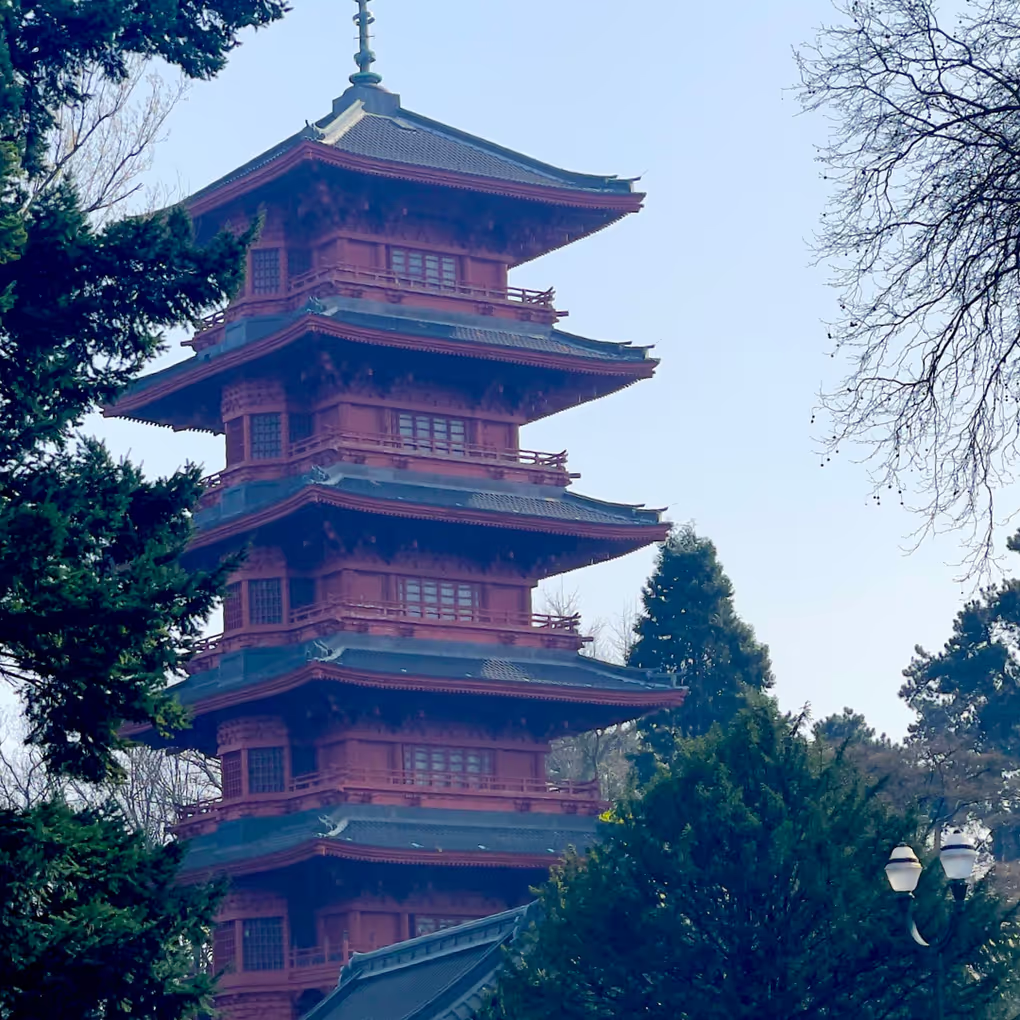
Neighbourhood near the Brussels workshop area photographed in 2026
Research, Sources, and Design
The sources of information were numerous: surviving instruments, iconography, repertoire, historical terminology, practical experience in historically informed luthiery and a certain fluency in various historical styles of playing, and above all the necessity of turning fragmentary evidence into a working design. More is covered in my book Da Spalla, but the essential point is simpler: the design could not be based on visual resemblance alone.
A convincing violoncello da spalla needed acoustical logic, historical awareness, and practical playability. Body dimensions, mensur, neck relationship, bridge, stringing, response, and physical handling all had to belong to one coherent system. Without that, the result would remain a short-lived curiosity rather than an instrument with real musical use.
This is why the revival took time. It was not a matter of copying a shape. It was a matter of discovering the culture that made such an instrument possible in the first place, then embodying that culture in a functional instrument again.
The Breakthrough in 2004
After months of work, research, travel, testing, and financial risk, the first instrument was ready in early 2004.
And it failed.
When I first strung it up, the prototype strings created by the master string maker Mimmo Peruffo that had seemed promising on a viola did not work on the actual instrument. The sound was not merely disappointing. It was absent. The entire project stood on the edge of collapse. It was not the first string set. While I carried out six months of library and museum research to create a design, Mimmo was making and sending me multiple prototype strings. And yet here we were: at one point, in a midnight phone call, he said he could not — understandably — see what might be wrong without actually touching the instrument he had never seen before. As he said back then, it was a little like designing an internal combustion engine first, and then looking for what fuel to burn inside it to make it move. No: first you have the fuel and its properties. Then you design an engine around it. I hope the analogy makes sense to the reader.
That failure led to one of the decisive moments in the revival: a journey to Italy to work directly with Mimmo Peruffo, where further work on the strings continued. After days of exhausting trial and error, the breakthrough finally came in the middle of the night. The right combination allowed the instrument to come fully alive.
What had existed in drawings, sources, and conviction now existed in sound.
That moment mattered because it changed the instrument from an idea into a musical reality. Without that step, there would have been no serious adoption, no concert use, no further development, and no lasting revival.
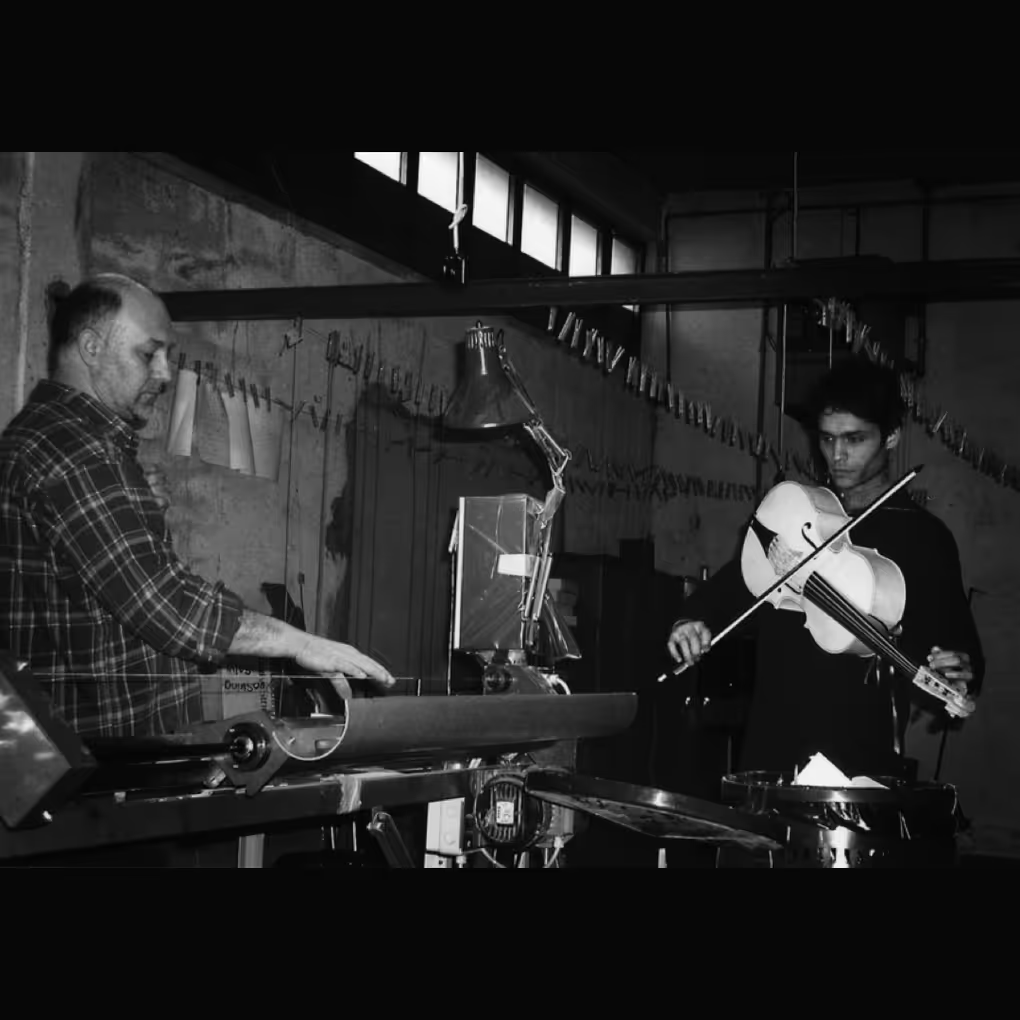
Working with Mimmo Peruffo in Vicenza on string development for the violoncello da spalla in 2004
The Breakthrough in 2004
After months of work, research, travel, testing, and financial risk, the first instrument was ready in early 2004.
And it failed.
When I first strung it up, the prototype strings created by the master string maker Mimmo Peruffo that had seemed promising on a viola did not work on the actual instrument. The sound was not merely disappointing. It was absent. The entire project stood on the edge of collapse. It was not the first string set. While I carried out six months of library and museum research to create a design, Mimmo was making and sending me multiple prototype strings. And yet here we were: at one point, in a midnight phone call, he said he could not — understandably — see what might be wrong without actually touching the instrument he had never seen before. As he said back then, it was a little like designing an internal combustion engine first, and then looking for what fuel to burn inside it to make it move. No: first you have the fuel and its properties. Then you design an engine around it. I hope the analogy makes sense to the reader.
That failure led to one of the decisive moments in the revival: a journey to Italy to work directly with Mimmo Peruffo, where further work on the strings continued. After days of exhausting trial and error, the breakthrough finally came in the middle of the night. The right combination allowed the instrument to come fully alive.
What had existed in drawings, sources, and conviction now existed in sound.
That moment mattered because it changed the instrument from an idea into a musical reality. Without that step, there would have been no serious adoption, no concert use, no further development, and no lasting revival.
From First Instrument to Professional Use
A revival only becomes real when musicians choose to live with the instrument in practice.
That happened quickly. The first successful instruments were not built to remain in a museum-like state. They entered musical life. They were played, tested, adjusted, recorded, and heard in public. I also made my own instrument and began performing on it myself, which gave me a second perspective no less important than making: the bodily reality of playing it on stage.
This mattered because the violoncello da spalla is not merely a concept. It is a performer's instrument. It must answer not only to the eye or to scholarship, but to the nervous system, the chest, the bow arm, the left hand, the ear, and the demands of real repertoire.
The musicians who adopted it did so not because it needed defending, but because it worked.
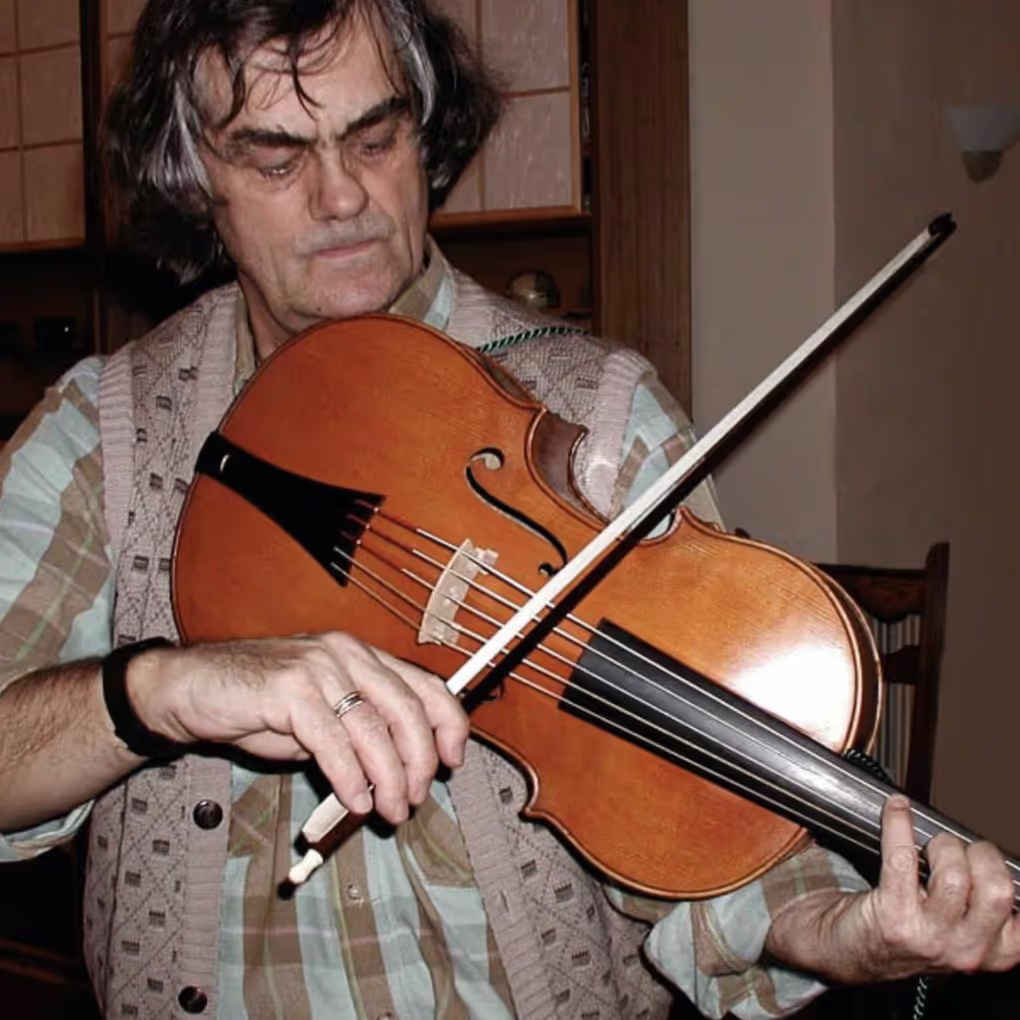
Sigiswald Kuijken trying a violoncello da spalla by Dmitry Badiarov in Brussels in 2004
From First Instrument to Professional Use
A revival only becomes real when musicians choose to live with the instrument in practice.
That happened quickly. The first successful instruments were not built to remain in a museum-like state. They entered musical life. They were played, tested, adjusted, recorded, and heard in public. I also made my own instrument and began performing on it myself, which gave me a second perspective no less important than making: the bodily reality of playing it on stage.
This mattered because the violoncello da spalla is not merely a concept. It is a performer's instrument. It must answer not only to the eye or to scholarship, but to the nervous system, the chest, the bow arm, the left hand, the ear, and the demands of real repertoire.
The musicians who adopted it did so not because it needed defending, but because it worked.
Why Violinists and Violists Adapt to It So Quickly
One of the most practical questions musicians ask is whether the violoncello da spalla is difficult to learn.
The answer depends on the player, but for violinists and violists the transition is often far quicker than outsiders assume.
Why?
Because the instrument fits within the physical world of the violin family rather than the seated vertical world of the modern cello. The left hand, the right arm, sense of bridge curvature, and placement of the strings feel closer to the violin and viola than many people expect. At the same time, the chest-level resonance and cello range create an entirely different experience.
For many players, the real surprise is not difficulty, but immediacy.
That does not mean mastery comes instantly. It means the instrument often reveals itself as playable, natural, and musically persuasive much sooner than sceptics imagine.
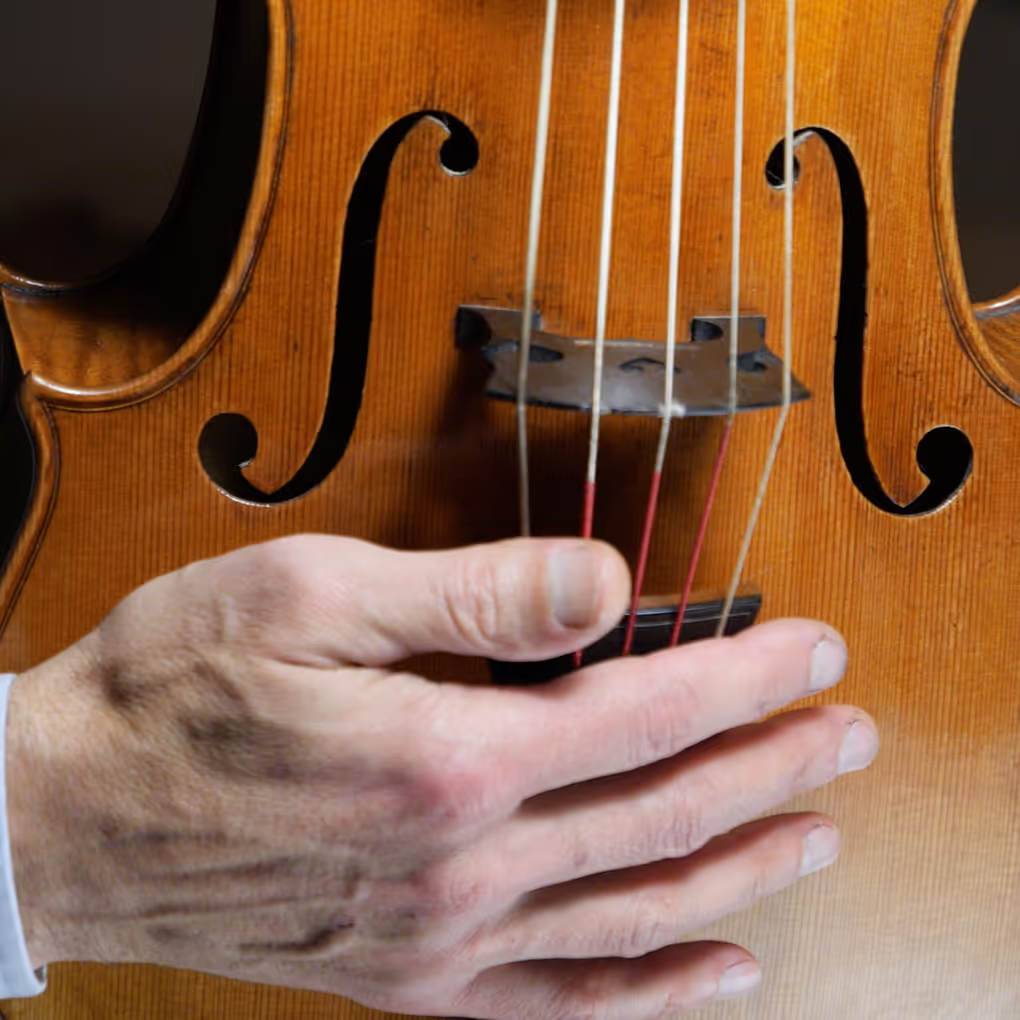
Violoncello da spalla held in the maker’s hands showing scale and craftsmanship details
Why Violinists and Violists Adapt to It So Quickly
One of the most practical questions musicians ask is whether the violoncello da spalla is difficult to learn.
The answer depends on the player, but for violinists and violists the transition is often far quicker than outsiders assume.
Why?
Because the instrument fits within the physical world of the violin family rather than the seated vertical world of the modern cello. The left hand, the right arm, sense of bridge curvature, and placement of the strings feel closer to the violin and viola than many people expect. At the same time, the chest-level resonance and cello range create an entirely different experience.
For many players, the real surprise is not difficulty, but immediacy.
That does not mean mastery comes instantly. It means the instrument often reveals itself as playable, natural, and musically persuasive much sooner than sceptics imagine.
Commissioning a Violoncello da Spalla
Commissioning a violoncello da spalla is not a transaction. It is a collaboration.
Each instrument begins with a conversation about the musician's needs, repertoire, model size, sound ideal, and practical use. The process typically involves:
1. Initial consultation to define musical goals and practical requirements
2. Measurements and adaptation to the player's physique
3. Selection of materials, varnish, and fittings
4. Ongoing dialogue during the making process
5. Final setup and adjustment with the musician
The timeline is typically 6–24 months, depending on complexity and workshop schedule.
What distinguishes this process is not the object, but the relationship. Every decision—from string length to response under the bow—is made with a specific musical voice in mind.
For professional musicians, the question is not simply how to acquire an instrument, but how to begin well—with a maker who understands both the historical problem and the living reality of performance.
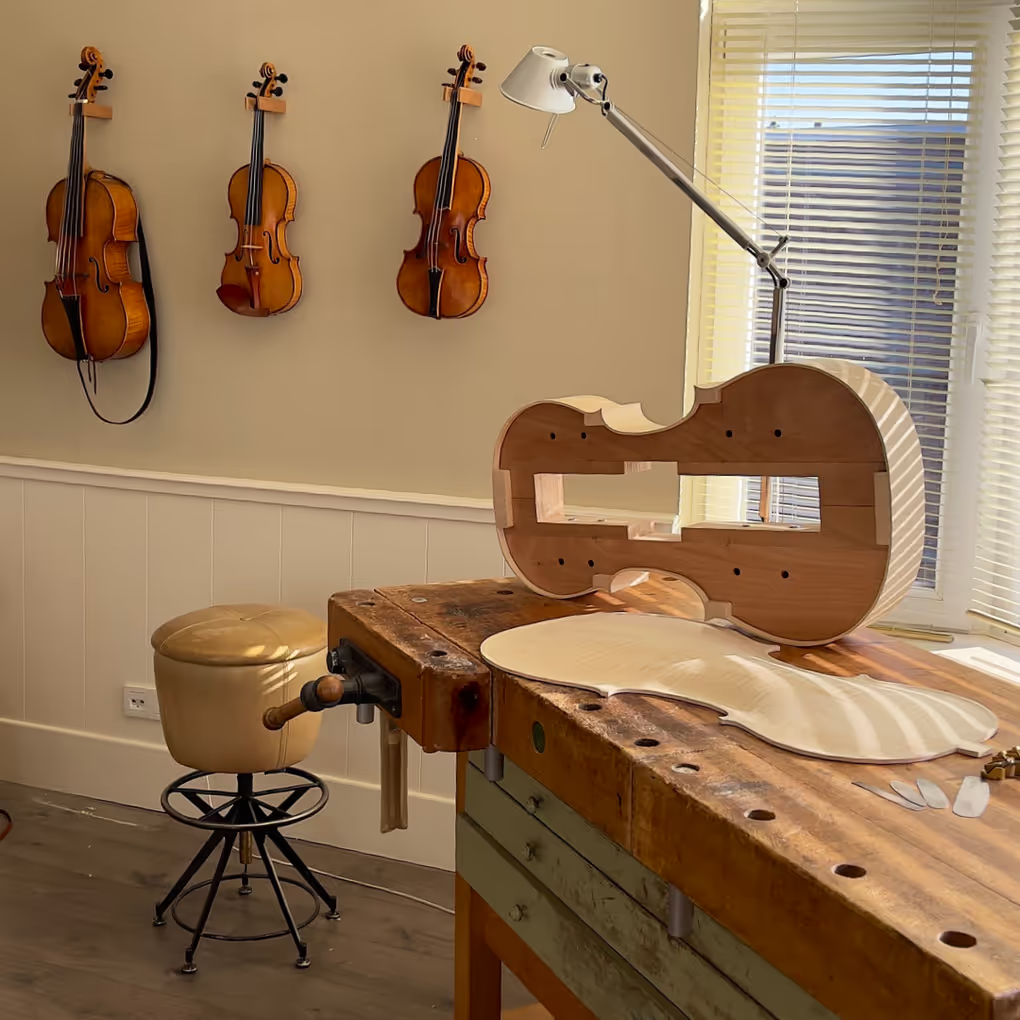
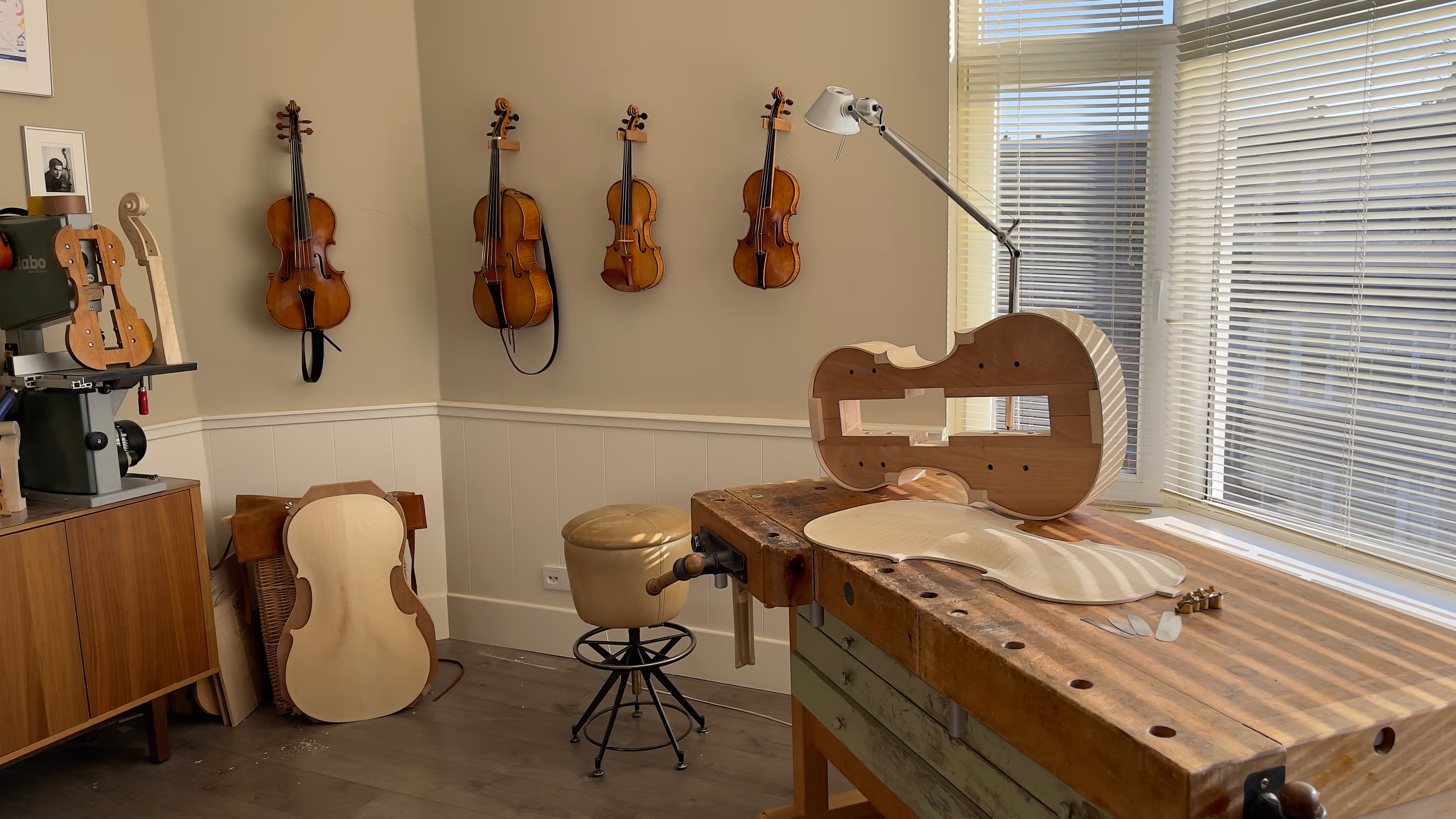
The Hague workshop where violoncellos da spalla are made in 2026, more than two decades after the revival began in 2003 in Brussels.
Commissioning a Violoncello da Spalla
Commissioning a violoncello da spalla is not a transaction. It is a collaboration.
Each instrument begins with a conversation about the musician's needs, repertoire, model size, sound ideal, and practical use. The process typically involves:
1. Initial consultation to define musical goals and practical requirements
2. Measurements and adaptation to the player's physique
3. Selection of materials, varnish, and fittings
4. Ongoing dialogue during the making process
5. Final setup and adjustment with the musician
The timeline is typically 6–24 months, depending on complexity and workshop schedule.
What distinguishes this process is not the object, but the relationship. Every decision—from string length to response under the bow—is made with a specific musical voice in mind.
For professional musicians, the question is not simply how to acquire an instrument, but how to begin well—with a maker who understands both the historical problem and the living reality of performance.
In Practice
What has been described here either appears in sound—or it does not.
Two instruments by Badiarov. The first made in 2004 for Sigiswald Kuijken.
Still in use. Still speaking.
If you are considering commissioning a violoncello da spalla, the right starting point is simple:
Describe what draws you to the instrument.
What you play now. What you are searching for.
From there, we determine which kind of instrument is right for you — and how to begin in a way that makes musical, physical, and artistic sense.

Sigiswald Kuijken and Lucia Swarts performing on two violoncellos da spalla by Dmitry Badiarov (first instrument made for Kuijken in 2004)
In Practice
What has been described here either appears in sound—or it does not.
Two instruments by Badiarov. The first made in 2004 for Sigiswald Kuijken.
Still in use. Still speaking.
If you are considering commissioning a violoncello da spalla, the right starting point is simple:
Describe what draws you to the instrument.
What you play now. What you are searching for.
From there, we determine which kind of instrument is right for you — and how to begin in a way that makes musical, physical, and artistic sense.