Journal
The Architecture of Memory
A Lesson in Lineage, Practice, and Musical Intelligence
January 2026 — The Hague
The Sound of the Lineage
Before the workshop, before the wood, there was the sound.
Mark Komissarov belonged to the Auer tradition. He disliked noise, display, and borrowed authority. He insisted that artistic ideas do not come from imitating recordings, but from intelligent practice, followed by reading, thinking, walking, and living with attention.
“Live your life,” he would say. “If you have no life, you will have nothing to express in your music.”
This video matters to me not as nostalgia, but as evidence of a discipline: sound shaped by memory, restraint, and musical thought. That discipline later entered my work as a maker.
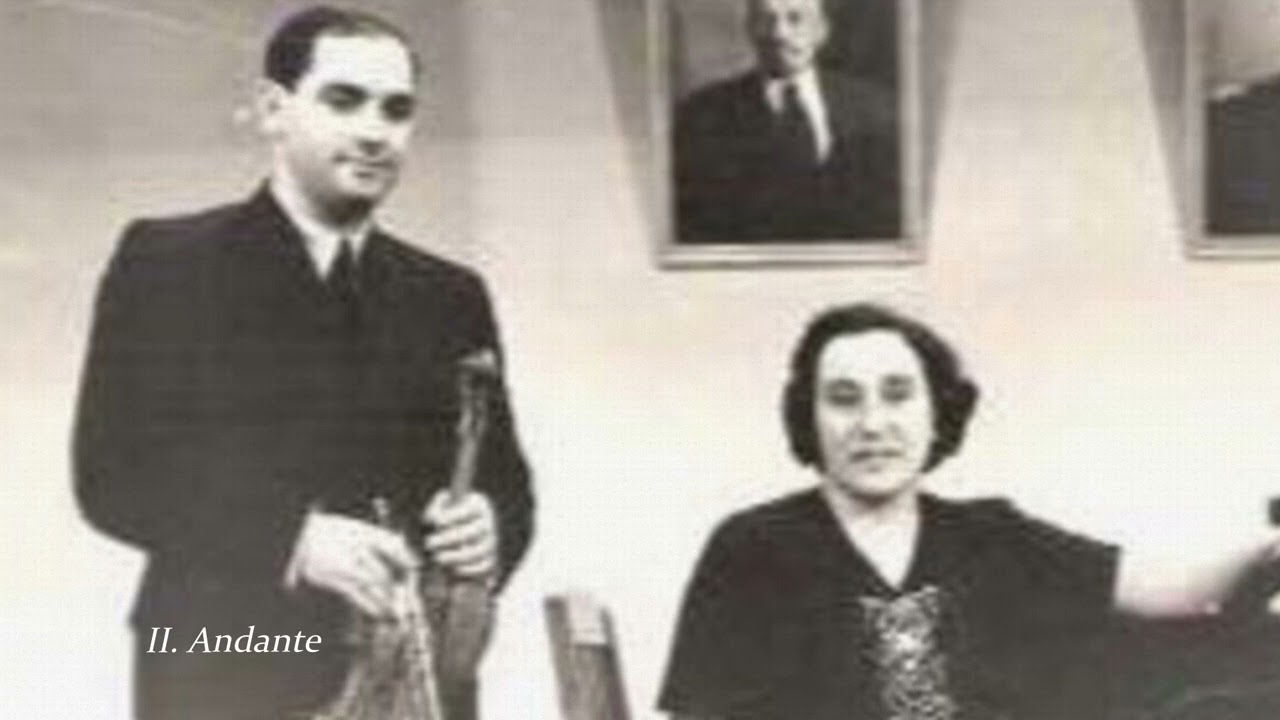
Mark Komissarov plays Mozart
The Sound of the Lineage
Before the workshop, before the wood, there was the sound.
Mark Komissarov belonged to the Auer tradition. He disliked noise, display, and borrowed authority. He insisted that artistic ideas do not come from imitating recordings, but from intelligent practice, followed by reading, thinking, walking, and living with attention.
“Live your life,” he would say. “If you have no life, you will have nothing to express in your music.”
This video matters to me not as nostalgia, but as evidence of a discipline: sound shaped by memory, restraint, and musical thought. That discipline later entered my work as a maker.
The Sanctuary
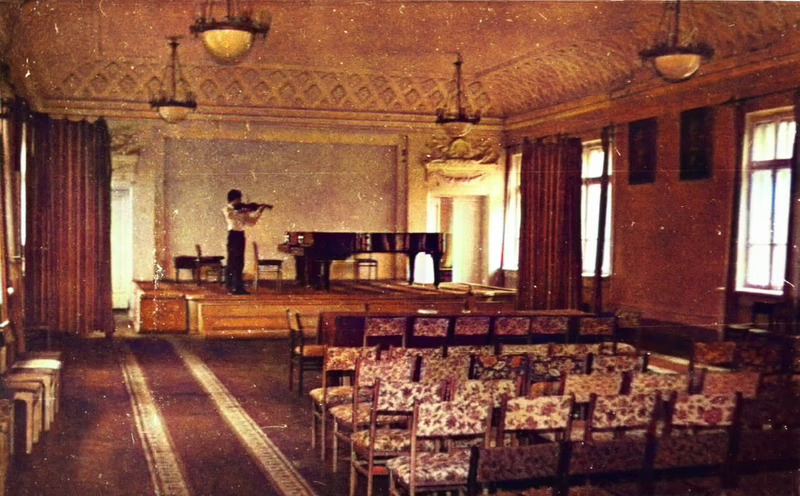
1989. The St. Petersburg Conservatoire. The air in the room carried the faint, dignified scent of floor wax and old scores. I stood by the grand piano, performing the Goldmark Concerto, my eyes fixed on the portrait of Brahms.
In a large leather chair across from me sat Mark. He represented a lineage reaching back to Leopold Auer, through Sher and Korguev, and further through Joachim, Rode, Viotti, Pugnani, Somis, and Corelli. Written out, three centuries can feel abstract.
In reality, it is a short chain of teachers, players, and remembered ways of working.
And Mark appeared to be sound asleep.
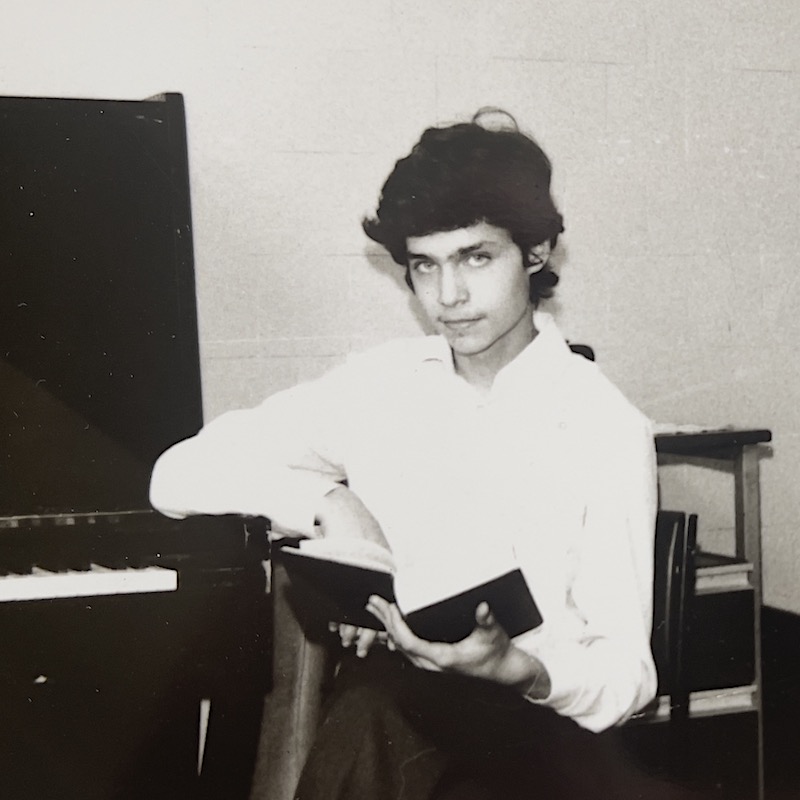
The author in 1985, Leningrad Special Music School
The Sanctuary
1989. The St. Petersburg Conservatoire. The air in the room carried the faint, dignified scent of floor wax and old scores. I stood by the grand piano, performing the Goldmark Concerto, my eyes fixed on the portrait of Brahms.
In a large leather chair across from me sat Mark. He represented a lineage reaching back to Leopold Auer, through Sher and Korguev, and further through Joachim, Rode, Viotti, Pugnani, Somis, and Corelli. Written out, three centuries can feel abstract.
In reality, it is a short chain of teachers, players, and remembered ways of working.
And Mark appeared to be sound asleep.
“Dima, Why Have You Stopped?”
I skipped about nine pages and went straight to the finale. When I finished, he woke up.
“Dima, why have you stopped? Play once again.”
“But Mark Mikhailovich,” I said, “I think you were sound asleep.”
“No, Dima, I was listening. Why do you speak like this? Come, play again.”
“No, Mark Mikhailovich... you were snoring.”
He paused. “Dima, come here. Sit next to me.” I was scared; I thought I had made him angry.
“Have you practiced?”
“Yes, eight hours every day.”
“Are you crazy? Are you completely nuts? You should never practice more than an hour and a half. Two hours at most.”
The warm, sun-drenched corner of the workbench
“Dima, Why Have You Stopped?”
I skipped about nine pages and went straight to the finale. When I finished, he woke up.
“Dima, why have you stopped? Play once again.”
“But Mark Mikhailovich,” I said, “I think you were sound asleep.”
“No, Dima, I was listening. Why do you speak like this? Come, play again.”
“No, Mark Mikhailovich... you were snoring.”
He paused. “Dima, come here. Sit next to me.” I was scared; I thought I had made him angry.
“Have you practiced?”
“Yes, eight hours every day.”
“Are you crazy? Are you completely nuts? You should never practice more than an hour and a half. Two hours at most.”
The 15-Minute Rule
Then he told me something that changed my life.
“Not everything in that score is difficult,” he said. “Find the spots that are. Set a goal. Achieve it. Then, set the violin aside. Have a cup of tea. Don't touch it for fifteen minutes.
When you come back, try to play it again. If you cannot, it means you are forcing something into your body that is wrong. Your body will never accept it because it is against nature. Even if you master it for a moment, you will forget it tomorrow. Change the way you practice, and practice again.
The next day, play the difficult spot without warming up. Can you play it? If you can—good. Your method is sound. If you cannot—change the method first, then practice. Once the goal is achieved, set the violin aside until the next day. Read a good book. Visit a museum. Spend time in nature. Enrich your mind. Live your life. Because if you don't have a life, you will have nothing to express in your music.”
This was the transition from labour to intelligence. Mastery was not measured by hours alone, but by the quality of intention, the feedback of the body, and the ability to correct method before force became habit.

The horizon from a sailing boat, a moment of nature
The 15-Minute Rule
Then he told me something that changed my life.
“Not everything in that score is difficult,” he said. “Find the spots that are. Set a goal. Achieve it. Then, set the violin aside. Have a cup of tea. Don't touch it for fifteen minutes.
When you come back, try to play it again. If you cannot, it means you are forcing something into your body that is wrong. Your body will never accept it because it is against nature. Even if you master it for a moment, you will forget it tomorrow. Change the way you practice, and practice again.
The next day, play the difficult spot without warming up. Can you play it? If you can—good. Your method is sound. If you cannot—change the method first, then practice. Once the goal is achieved, set the violin aside until the next day. Read a good book. Visit a museum. Spend time in nature. Enrich your mind. Live your life. Because if you don't have a life, you will have nothing to express in your music.”
This was the transition from labour to intelligence. Mastery was not measured by hours alone, but by the quality of intention, the feedback of the body, and the ability to correct method before force became habit.
The Analytical Maker
This lesson allowed me to maintain a career performing forty concerts a year while building instruments at the same time. I applied Komissarov’s analytical method to the workbench.
I do not build instruments to be conquered through force. I design them to work with the player’s body, repertoire, and musical intention. When an instrument is properly resolved, the musician should not need to fight its proportions, response, or balance.
The connection between practice and making is direct: both depend on listening, testing, correction, and respect for what the body will or will not accept. An instrument that ignores this relationship may look correct, but it will not fully serve the musician.
This is one reason my work cannot be separated from performance. The instruments are made by someone who has lived with repertoire, stage conditions, ensemble work, fatigue, risk, and the practical demands of professional playing from the inside.
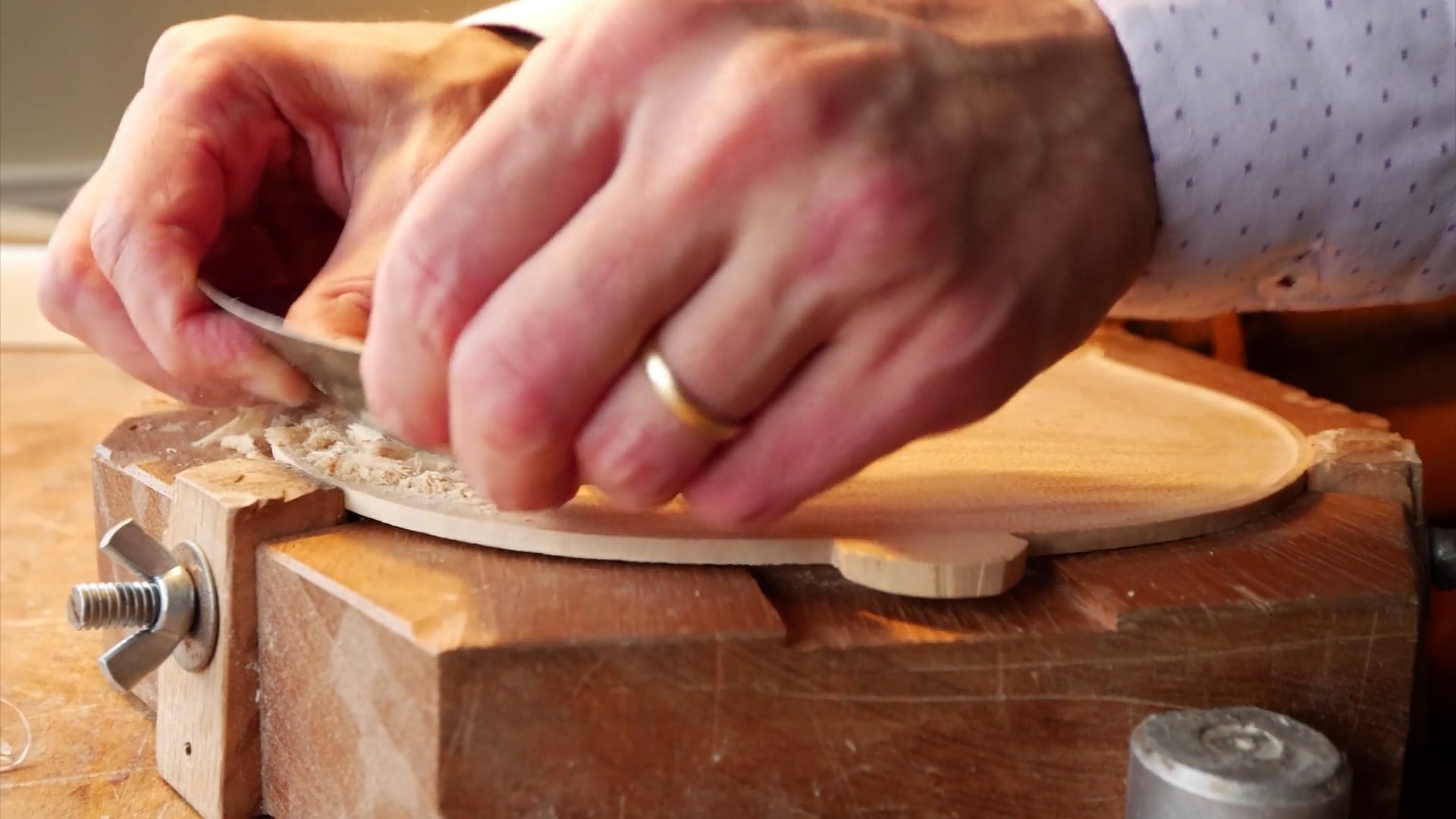
The analytical approach
The Analytical Maker
This lesson allowed me to maintain a career performing forty concerts a year while building instruments at the same time. I applied Komissarov’s analytical method to the workbench.
I do not build instruments to be conquered through force. I design them to work with the player’s body, repertoire, and musical intention. When an instrument is properly resolved, the musician should not need to fight its proportions, response, or balance.
The connection between practice and making is direct: both depend on listening, testing, correction, and respect for what the body will or will not accept. An instrument that ignores this relationship may look correct, but it will not fully serve the musician.
This is one reason my work cannot be separated from performance. The instruments are made by someone who has lived with repertoire, stage conditions, ensemble work, fatigue, risk, and the practical demands of professional playing from the inside.
The Golden Thread
You might not know who Mark Komissarov was. But you know the line he belonged to.
The Corelli line: Komissarov — Sher — Korguev — Auer — Joachim — Böhm — Rode — Viotti — Pugnani — Somis — Corelli.
The Wieniawski line entered my life through Sigiswald Kuijken, with whom I studied baroque violin at the Royal Conservatoire of Brussels and later worked in the world of historically informed performance.
These names matter because they are not decorative references. They locate my work inside real musical transmission: teachers, players, technique, memory, discipline, and responsibility.
I have not invented a tradition here. I have inherited one, worked inside it as a performer, and carried it into instrument making. Every instrument that leaves my workshop in The Hague is shaped by that responsibility: to continue a tradition through understanding, not imitation alone.
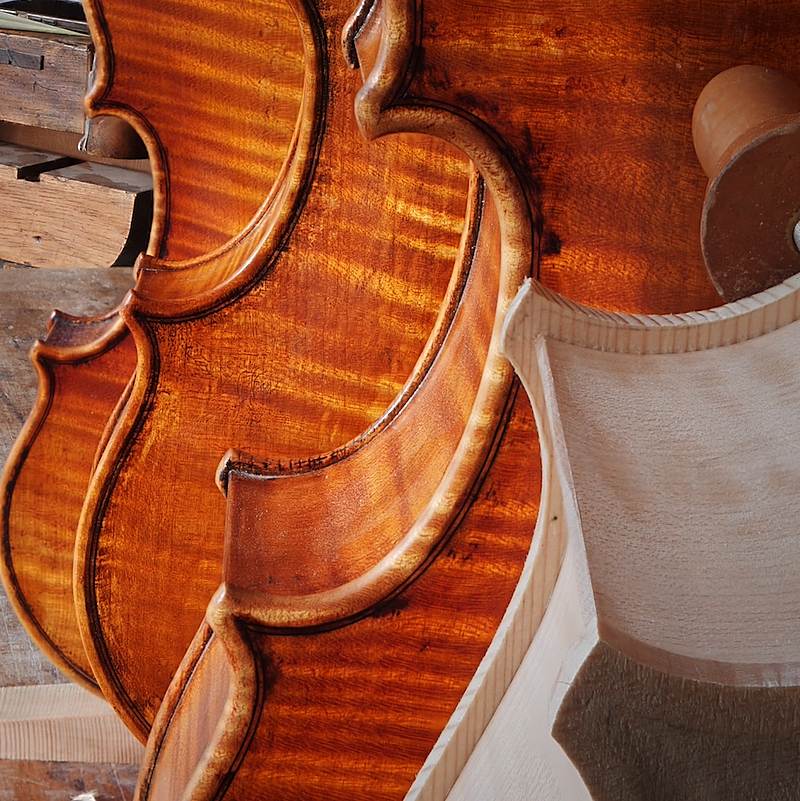
Violin, viola, violoncello da spalla and a cello sunbathing in the workshop
The Golden Thread
You might not know who Mark Komissarov was. But you know the line he belonged to.
The Corelli line: Komissarov — Sher — Korguev — Auer — Joachim — Böhm — Rode — Viotti — Pugnani — Somis — Corelli.
The Wieniawski line entered my life through Sigiswald Kuijken, with whom I studied baroque violin at the Royal Conservatoire of Brussels and later worked in the world of historically informed performance.
These names matter because they are not decorative references. They locate my work inside real musical transmission: teachers, players, technique, memory, discipline, and responsibility.
I have not invented a tradition here. I have inherited one, worked inside it as a performer, and carried it into instrument making. Every instrument that leaves my workshop in The Hague is shaped by that responsibility: to continue a tradition through understanding, not imitation alone.
The Komissarov Lesson
The same story, shared by the author in a 2019 video.
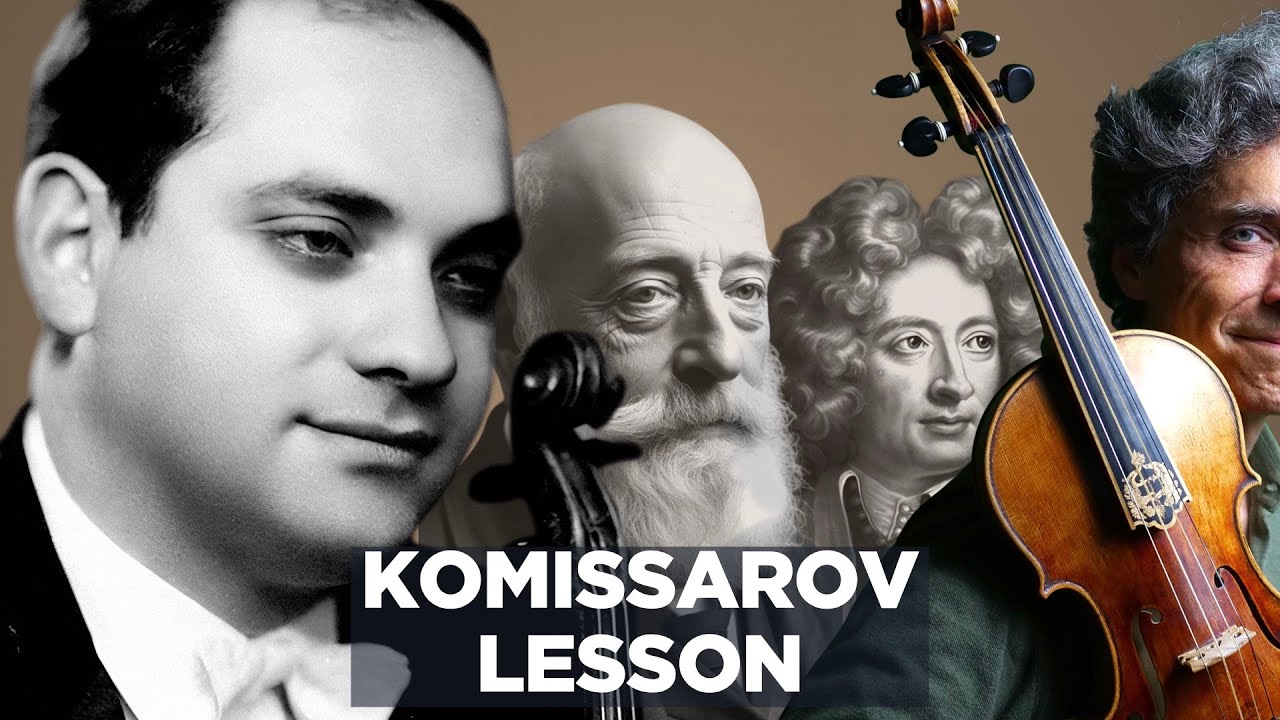
The author sharing this story live in 2019
The Komissarov Lesson
The same story, shared by the author in a 2019 video.