Not every musician can own a Stradivari.Every musician still needs a voice.
This is why Badiarov Violins exists, since 1992.
Some instruments begin with historical measurements.Others begin with the musical reasons those measurements once served.
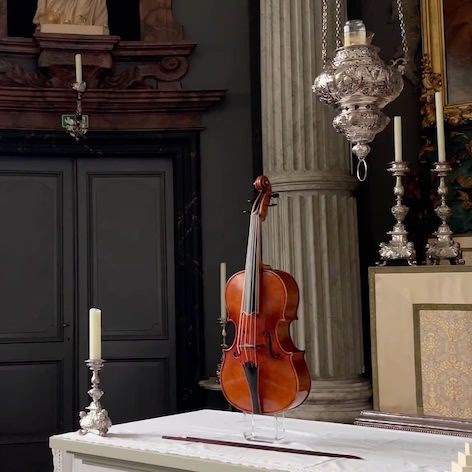
Badiarov’s harmony-first method
Before sound becomes form, musical relationships are resolved as proportion. Those proportions are then translated into the measurements, response, and voice of the instrument.
A living lineage
Badiarov Violins continues a tradition in which instrument making was shaped not only by craftsmanship, but by musical understanding. Rather than copying historical forms mechanically, the atelier studies the relationships between harmony, proportion, sound, and the physical experience of the musician.
Lineage is not nostalgia. It is the discipline of seeking what earlier masters sought. “Do not seek to follow in the footsteps of the wise; seek what they sought.” — Matsuo Bashō

Instruments shaped for performance
The atelier creates violins, violas, and violoncellos da spalla for professional musicians. Each instrument is developed through attention to proportion, response, projection, balance, and the physical relationship between player and instrument.
Commission an instrument
A commission begins with a careful conversation about your repertoire, sound, physical needs, current instrument, and the role the new instrument must serve.
Private consultation
Discuss your playing, repertoire, current instrument, and artistic requirements
Sound and purpose
Clarify the musical role, tonal character, pitch needs, and practical context
Wood and proportion
Select materials and design relationships appropriate to the instrument
Making period
The instrument is built, adjusted, and refined over time
First playing
The completed instrument is played, tested, and adjusted with the musician
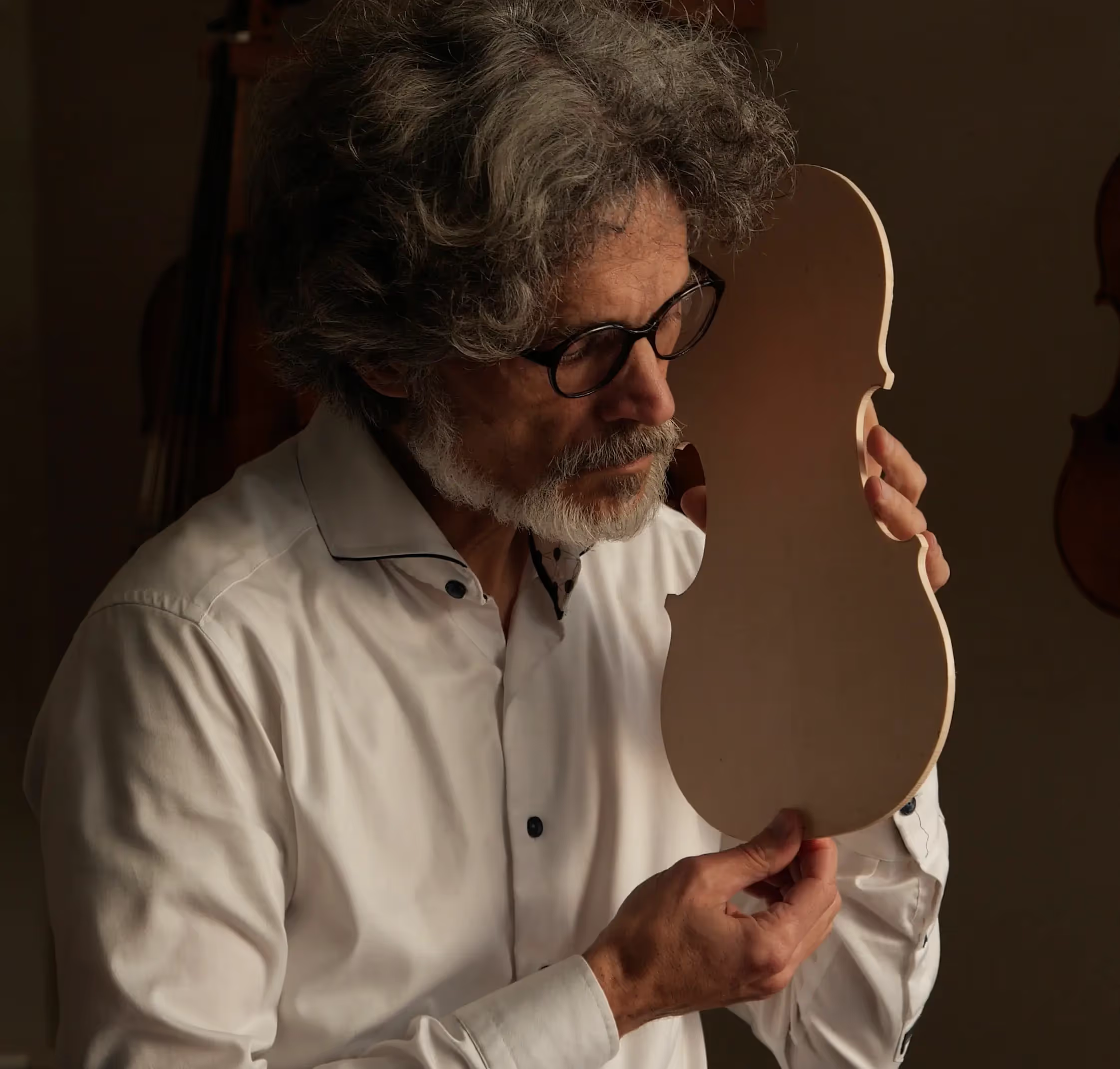
An alternative to the antique market
Important historical Italian instruments have become inaccessible to most performers. Badiarov Violins approaches the question differently: not by imitating prestige, but by creating new instruments whose musical relationships, response, and handling are shaped from the beginning.
Badiarov Violins
Part of a living tradition
Instruments by Dmitry Badiarov are played by internationally recognised performers including Sigiswald Kuijken, Ryo Terakado, and Sergey Malov. His work spans violins, violas, violoncellos da spalla, and historical instruments, serving musicians engaged with both historical understanding and living performance.