Join our Free Newsletter!
Do not hesitate to call us today! +31 (0)6 1125 7695, daily 9:00-20:00 (GMT +1)
Next year - 2012 - my studio will celebrate its 20th anniversary of professional services for musicians.
It all started in St.Petersburg, moved to Brussels and Tokyo, and now, since 2010, we are back to Europe, to The Netherlands - the cradle of Early Music, all-things-historical - the finest place for what we are doing in violin-making.
So, what we are doing in violin-making? In short, we approach violin-making like some musicians approach music, specially the Early Music. It’s not just about less vibrato or clipping a few millimetres from the wood here and there. It is about a completely different mentality, about creation, invention, passion, and drawing from the primary sources of culture.
You might be wondering, who am I to talk about vibrato and musical approach! Well, here it the secret (one of many): most violin-makers do 90% of restoration and 10%, if any, of violin-making. I was doing 90% of making and 10% of playing, which roughly translated into some 30-40 CDs, 20-30 concerts a year with small groups such as La Petite Bande, Ricercar Consort and Bach Collegium Japan. Now it is, however, 90% making and 10% teaching violin-making: without these, my experience would be wasted.
Download our FREE brochure here
Extra info:
More about baroque violins VS modern
Viola and violoncello da spalla
Instruments for fine musicians
Some of my clients are Aaron Westman, Akio Obuchi, Ataúlfo Antón, Blai Justo, Carlos Albuisech, Cristobal Urrutia del Rio, Diana Roche, François Fernandez, Géraldine Roux, Hatano Masayuki, Hisashi Ono, Harumi Koijke Izumi Sato, Jamie Hey, Jesenka Balic Zunic, Johan van Aken, Kaoru Ouchiyama, Luis Otávio Santos, Madoka Nakamaru, Miwa Ogino, Mikio Tsunoda, Mika Akiha, Maartje Geris, Nooi Stryncks, Natsumi Wakamatsu, Paolo Cantamessa, Ritsu Kotake, Rainer Arndt, Ryo Terakado, Sigiswald Kuijken, Sergey Malov, Sara Kuijken, Samantha Montgomery, SeungRock Baek, Vincent Lesage, Yasue Higuchi, Yuki Koike, Yukie Yamaguchi and many others.
The secret craft
The craft, or rather its object - the violin - inspired writers and poets, painter and movie directors, however, what was the source of inspiration for the makers who created the first violins some time in the 16th century? What is the source of inspiration for making new instruments today, apart from the music and the violins already created? It is a matter of personal choice from which sources to draw one’s inspiration and each choice has deep consequences.
Making replicas of antique violins
Obviously, the source of inspiration can be the antique violins. This way of making a violin (or a viola or cello) consists of getting an original Stradivari (or a Guarneri, to mention just the two most copied) and producing a replica. One problem with this approach is that original Stradivaris are not generally accessible, consequently posters of Strads (or Guarneris) serve as the actual source of inspiration and of the technical information for the so called “copies”. Another problem is the fact the old instruments are no longer in their original state. The wood has shrunk or got naturally worn out, original parts such as necks, fingerboards, bridges, tailpieces, sound-posts and strings have been lost and replaced by the more modern counterparts. Even the thicknesses of the plates and the varnish are frequently tampered with, but the violins sound no matter what - because it is something else that makes their sound. There is also a problem of attribution and integrity - that is whether all parts of any given old violin are made by the same maker or not - in many cases can be notoriously difficult to ascertain. 19th century luthiers such as Jean-Baptist Vuillaume were in a privileged position: they had access to the famous italian violins barely 100 years old or a little older at that time, and were mostly in their original state. Unfortunately, this is no longer the case in the 21st century. The 19th century luthiers modernised all of the 17th-18th century instruments without leaving any documentation whatsoever. Violas and cellos suffered the most, though not much remain intact of the original violins either.
Going beyond the replicas
I chose the way which, I believe, is closer to the sources which nourished the cultural foundations of European civilisation. These date back to the Romans and the Greeks over 2000 years ago. Why? There are several good reasons. Firstly, old violins alone are insufficient as a source of information, consequently, even the copyists must rely on considerable amount of practical experience. Secondly, by the sources I mean those primary sources which inspired many European artists, musicians, music instrument makers, composers, painters, architects, philosophers etc - for thousands of years - till the French Revolution. These sources are a strange mix of ancient Arab, Roman, Greek and Christian ideas. This mix actually made the European culture distinct from other cultures and it also created its music and musical instruments including the violin. In my opinion, these primary sources have not ceased to be wholly inspiring. In fact, their influence can be seen, felt, experienced in the surviving culture around us and in the classical music. I do not exclude the antique violins from my list of sources because they are a cultural heritage too, but I do not limit my inspiration by the violins no matter how remarkable they are. Instead, I try to see the violin with the eyes of a craftsman of the 17th-18th century, from beneath, rather than from the top: from the perspective of the preceding centuries, rather than from the bell-tour of the 21st century. Thus, it is the different vantage point that I chose. Why? I trust the cultural foundations of European art, music and music instruments merit awareness, study, and practical use. This different vantage point can be easily understood by most artists working with the visual media as it is not uncommon for them to assimilate the history of art in order to place their creativity into the context, but this vantage point is also the artistic foundation for many a remarkable musicians. I am happy to see a few colleagues-luthiers working on the same path. it may not be the main-stream, but the purpose of my work - apart from making instruments inspiring a fine career for musicians - is also to draw the attention of young luthiers to the sources of culture rather than to its product - the violin. Alberto Bachman, in Encyclopaedia of the Violin (1st ed.1925), wrote that the surest way to make a fine violin is to trace a master's model. Perhaps for the world as it was in 1929 it was the surest way indeed, but the knowledge unearthed since then would be wasted if not used.
Why and How?
It is easy to say, “I chose a different vantage point!” WHY I do this is probably clear by now. Another question is HOW? How can the shift of the vantage point be achieved in practice?
Being surrounded for the past 17 years by a group of creative musical minds and brilliant performers, as well as instrument makers (I have been a member of La Petite Bande among others for 12 years, though violin-making has always been my top priority), I followed their wholly inspiring example. As they did, I absorbed and made my own the historical evidence on baroque art, music and period instrument-making surviving in ancient treatises, instruments, iconography and printed music. As they did, I practiced and assimilated the varieties of historical violinistic techniques existing in the past five centuries in order to understand the different stages of violin history and music. To add to this, I also re-constructed and made it my own the baroque principles of designing violins from the idea in the head like the original creators may have done. This kind of violin-making may well be called “historically inspired” because it is based on the same principles as the “historically inspired” performance. If you are not yet familiar with such performance consider listening to the performances of Nikolaus Harnoncourt, Jordi Savall, Sigiswald Kuijken, Philippe Pierlot, Frans Bruggen, Gustav Leonhardt, Francois Fernandez and the young generation of players Rachel Barton-Pine, Sergey Malov, Pierre Hantai, Luis Otavio Santos, Benjamin Alard and many others, not only violinists, of course. It may well happen that this experience will shift your vantage point and open a new space for your creativity.
About my violins
Please, click here to see the violins!
Latest News
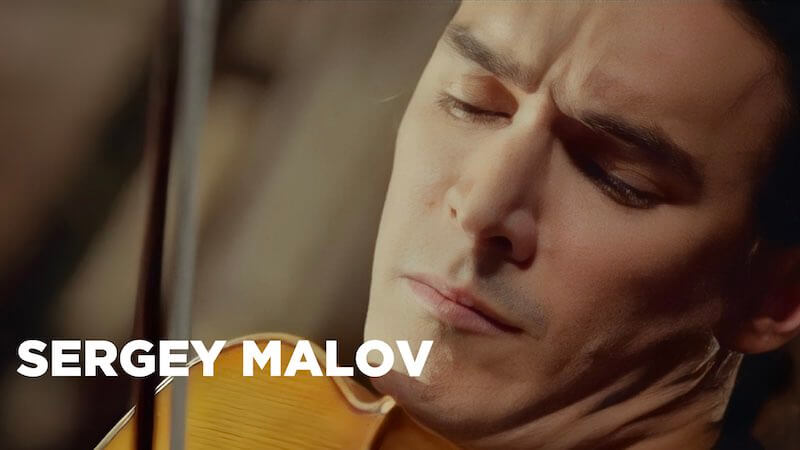
1.The latest instrument, no.71, violoncello da spalla made for Sergey Malov.
2.Translations: instead of maintaining a multilingual website we decided to split it into dedicated domains and consequently improve its usability and consistency.
3.Created a Violoncello da spalla fun page on FaceBook with a little introduction into the history and practical use of the instrument which was most commonly called “violoncello” or “violoncello piccolo” during the Baroque period. Please, click “Like” on the FB page.
4.You might have noticed that “Courses and Careers” are now renamed into “Apprenticeship”. The page is in construction.
5.I will be exhibiting my instruments in Tokyo, at the next String Instrument Fair (Gengakki Fair). Please, visit.
6.Subscribe now to receive the latest updates. Click here.
Violoncello da spalla made for Sergey Malov, (no.70)
This website cannot be viewed in IE!
Recommended: Firefox, Safari, Chrome.
© Badiarov Violins ™ All rights reserved 2011
Impressum Privacy policy Copyright General Conditions [+] Contact
Badiarov Violins celebrates its
20th anniversary in 2012!